Article
When the well runs dry: the story of self-supply in Cegléd-Öregszőlők, Hungary
Based on local surveys and personal stories, this article examines groundwater decline, self-supply, climate adaptation and water governance in rural Hungary.
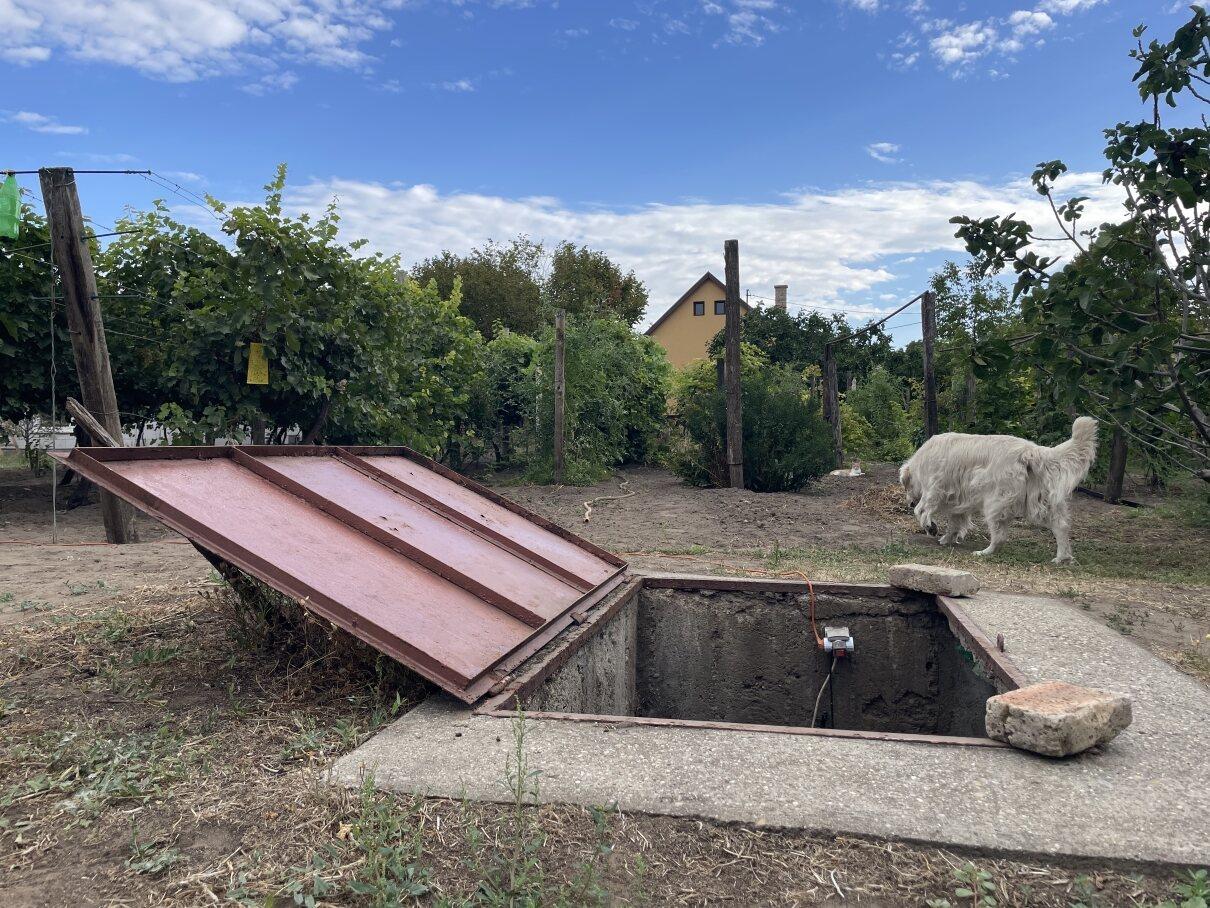
In early August, a drilled well at a household in Öregszőlők, on the outskirts of Cegléd stopped working for several days. After a brief spell of rain, the water began flowing again for a few minutes, then it stopped again. Elsewhere, wells began pumping sand, the pressure weakened, or pumps burnt out when water levels dropped too low.
At my neighbour’s property, there had always been one or two metres of water at the bottom of a ten-metre hand-dug well since 1995. By now, it has run dry. We dropped in a pebble: you can tell that it lands on a marshy layer, but there is no longer any splash.
These are local accounts from me and my community. They all point to the same vulnerability: in this area, hand-dug and drilled wells are essential to everyday life. Without them, there is no water for the household or garden. People sense that something is changing in their water security; individual solutions do not continue to meet their water needs, while systemic responses from the municipality or national government do not – yet – reach them. What remains is uncertainty, increasingly intertwined with climate anxiety.
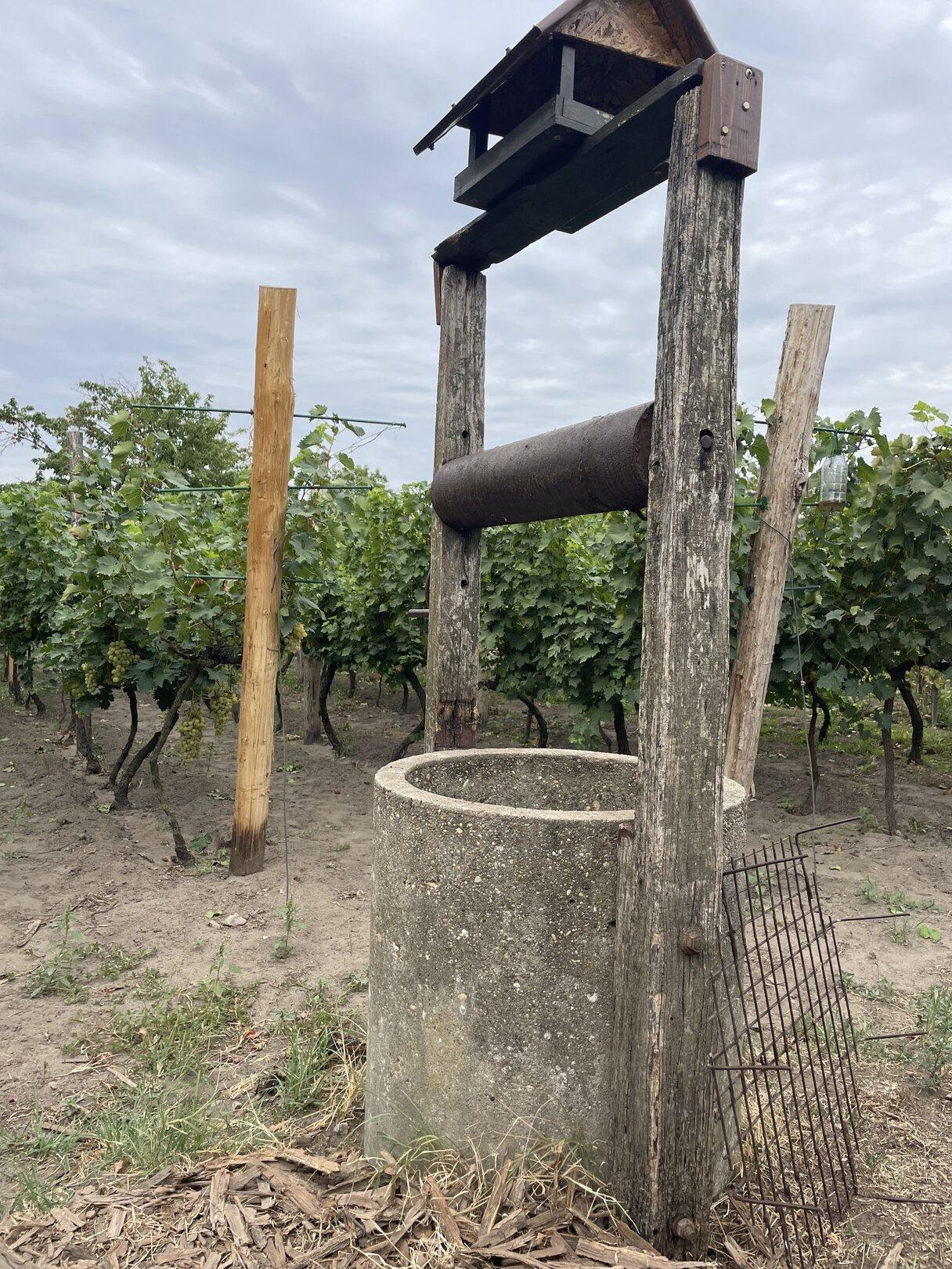
Cegléd: gateway to a drying Great Plain
According to national accounts, the summer of 2026 was Hungary’s driest and second warmest since 1901. HungaroMet data show that average nationwide summer rainfall was 74.1 mm, just 36% of the 1991-2020 norm. The Great Hungarian Plain was particularly dry.
According to the water authority’s website, the ground in the Cegléd area currently holds around one metre less water than it did thirty years ago. The agricultural town lies on the edge of the Homokhátság, a region already classified as semi-desert by FAO. Although Cegléd with its 36,000 population is in a better position than some other parts of the country, the drought-stricken summer also unsettled this town, which takes pride in being the gateway to the Great Plain, particularly in places without access to piped water.
“Drilling a well is becoming increasingly expensive; if the area dries out, our homes will also become vulnerable without piped water.”
Lessons from Öregszőlők
I grew up in this area, remain closely connected to it, and know well the opportunities and challenges that come with self-supplied water. As a careful optimist, I see the opportunity in early education. I quickly learnt that water does not necessarily flow from the tap and, even when it does, it may not be safe to drink. For years, we collected drinking water from my grandmother’s home, which was connected to the town’s piped network. I also learnt that water can leave marks on bathroom tiles when it contains too much iron or manganese. Perhaps it is no coincidence that I eventually chose to work in the water sector.
As an adult, the challenges have come to the fore. During hot, dry periods, we too have to restart pumps several times a day. Ensuring water quality is also our responsibility: we need to install suitable filters and treatment equipment and have them checked regularly. When the electricity goes out, which happens regularly in this area, the continuous water supply stops as well.
Over the summer, I often wondered how many people in the area were facing the same questions and challenges. Where do they find information? What creative solutions do locals use to secure their water supply? In recent weeks, I gathered experiences from 32 people through anonymous questionnaires and personal conversations. Together with my own story, these accounts reveal a shared water story.
The sample is not representative and records the experiences of voluntary respondents, so it cannot be used to project precise proportions across all 4,597 residents of the neighbourhood. Nevertheless, the responses reveal an important local story.
Key findings on self-supply in the area
- Water sources are mixed, but drilled wells dominate: 31 respondents have one, and 25 of them use the property as their permanent residence. Access to piped water is unequal; 20 respondents have no piped water and are waiting for the network to be extended.
- Fifteen respondents have never had their well water tested, seven only did so a long time ago, and nine within the past two to five years. Many decide how the water can be used based on its taste, smell or colour, on past experience, or on the views of neighbours or acquaintances. I visited a household where bottled water is used for drinking but well water for cooking. They trust that boiling provides sufficient disinfection, even though it does not alter nitrate, arsenic, iron or manganese levels.
- Twenty-two respondents said they have no real alternative water source. Dependence on wells often also means dependence on electricity. Without power, the pump does not work, and in several households the water supply stops altogether. Drought, rural infrastructure and energy security are therefore closely intertwined.
- Well reliability has deteriorated in several places: respondents reported declining or fluctuating yields and, at times, inadequate supply, especially during dry periods, heatwaves and heavy irrigation demand.
- Twenty-four respondents have observed the soil drying out, while twenty-two have seen plants dry out.
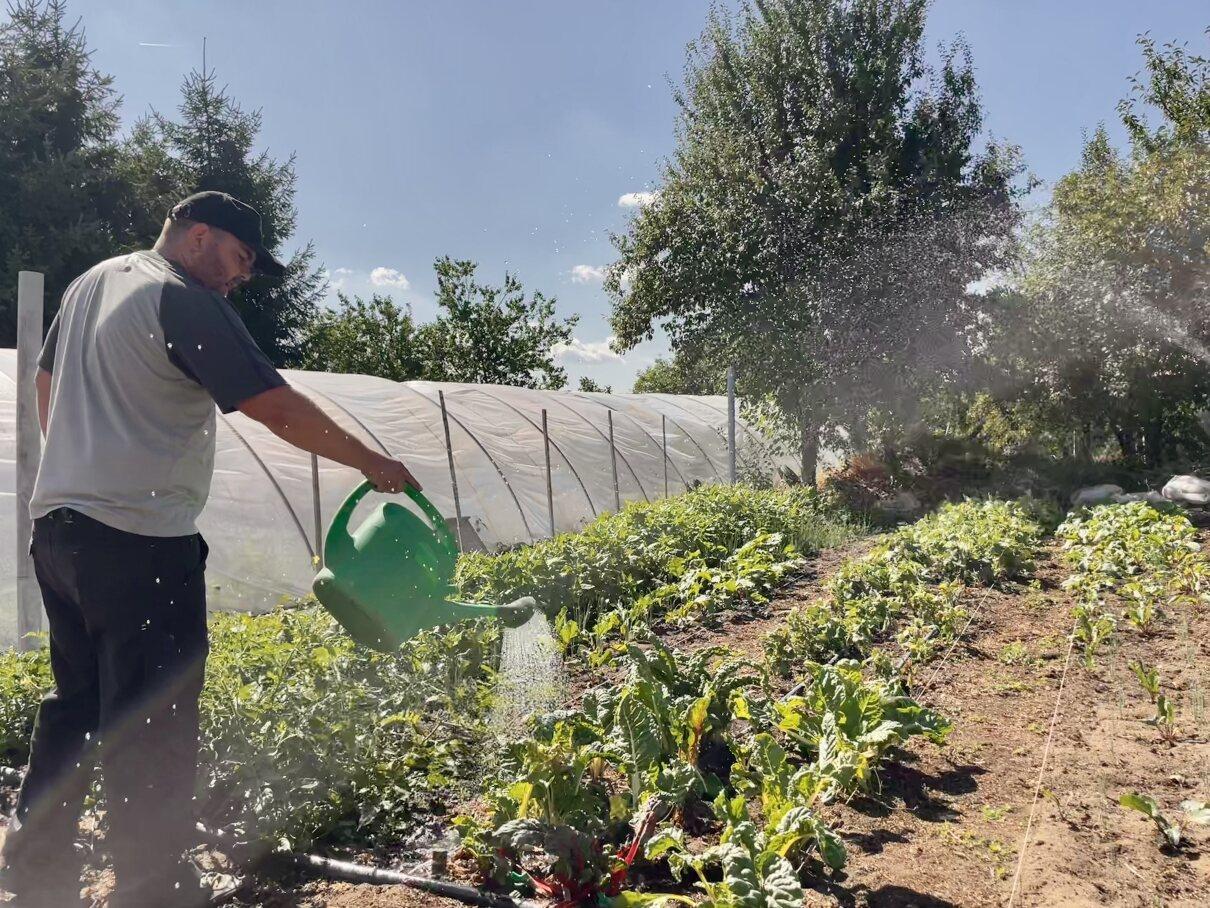
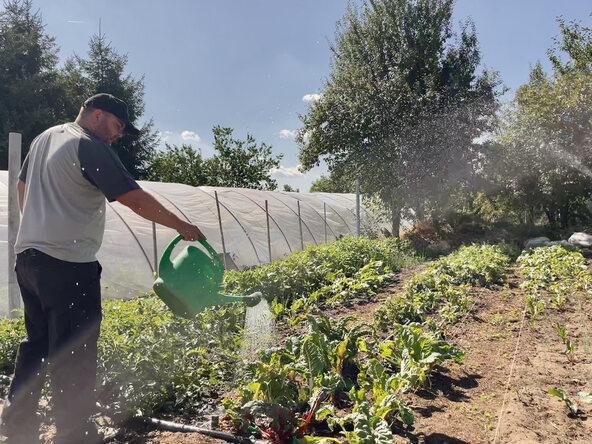
At Tamás Gazda’s organic farm which supplies around 50 families with vegetable boxes, the well worked reliably throughout the summer. The greater challenge was the soil’s rapid drying and overheating. This highlights the disappearance of so-called green water1: rainwater stored in the upper layers of soil and available to plants. This increases reliance on his well for irrigation and increases uncertainty around business continuity.
Tamás Gazda is considering growing crops beneath grape arbours, has experimented with mulching, and has even tried Iván Gyulai’s deep-mulch technique, which is a popular approach amongst permaculture enthusiasts. Yet because permaculture methods are more time consuming to apply, he believes that applying them to achieve the rapid and diversified production essential to his business requires greater capacity, as well as local grants to support small-scale producers in improving water retention and water management.
A difficult legal landscape to navigate
Most respondents (26) are uncertain about the policies and rules they have to adhere to when it comes to well development and maintenance. Many do not know when registration or a permit is required, or what to do about old wells or wells with an uncertain legal status.
I spoke with someone living in similar conditions reported in Ugyer. When I visited, he was boiling well water in a washbasin on top of a wood-heated barrel, preparing to wash his clothes outdoors. He also drills wells informally; completing his minimal income. According to the OECD's 2026 report on water governance in Hungary, the number of unregistered agricultural wells alone may reach 100,000.
I also contacted a well-drilling company operating in town. They told me they don't deal with retrospective permitting or prepare the required documentation. Based on a net search, depending on the depth of the well, responsibility for permitting may lie with the municipal clerk or another municipal authority; the level of possible fines is also unclear. Although the legislation revised in 2024 is progressive in many respects, distinguishing between wells based on their depth, intended use, and the water-resource protection status of their location, navigating the regulatory framework remains a veritable maze that only the most determined citizens can successfully manage. The process is costly, and even after completion there is no guarantee that an already constructed well will be allowed to remain in operation or that a newly drilled well will provide access to safe drinking water. In many cases, installing water treatment equipment is a substantial additional expense, sometimes costing several million forints. Until 2024, a simplified, penalty-free registration scheme was in effect, but this applied only to facilities no deeper than 50 metres.
It is therefore not surprising that unauthorised well drilling is common, or that existing wells are often not reported to the authorities.
The new government's 2026 Sustainable Water Management Action Plan may open a new chapter, provided that local institutions can make the rules and their implementation understandable and accessible to citizens. Until then, many people remain caught between growing water insecurity, administrative complexity, and the practical necessity of securing water for their households by whatever means are available.
What's next? Individual responsibility versus water as a shared concern
Climate change causes great concern among most respondents, often accompanied by uncertainty, anger or even climate anxiety. However, the responses also reveal a community that is open to adaptation and willing to take responsibility.
“It is devastating. Something that used to feel entirely natural is now at risk. Until now, nobody has seriously addressed this issue. It would be good to create areas for collecting rainwater.”
Commonly mentioned solutions include rainwater harvesting, mulching, watering in the morning or evening to reduce evaporation, and planting drought-tolerant plants.
“A few years ago, we realised it was not sustainable to run the automatic irrigation every day throughout the summer just to keep the lawn green.”
Individual adaptation, however, has its limits.
“Last summer and this summer, we had problems with the well’s yield. Because we live on sandy soil, a deeper well would be useful here, but unfortunately it would place a heavy financial burden on the family.”
“Well drilling is becoming increasingly expensive, and deeper wells require permits, which can cost several million forints (starting from around 5000 euros). If the area dries out, homes without piped water may lose their value, even though they often represent a lifetime’s work.”
Many people want to know exactly how much groundwater remains in the area and how much can be used safely. Residents try to interpret the condition of a shared, invisible resource from the sound of their own well, changes in water pressure, or a neighbour’s experience. At the same time, they themselves pay for and arrange well drilling, permitting, maintenance and drinking-water quality testing.
Complex problems of this kind cannot be solved at the individual level.
“We are not using our own water, but the groundwater resource beneath us, which is shared.”
Most respondents acknowledge that water security requires collective action. Several would be open to a community discussion if it were supported by clear communication, expert participation and facilitation by the municipality, and if the assessment did not begin with sanctions.
“The idea that ‘everyone can do as they see fit’ is not sustainable. We need to talk about this and define a standard that is acceptable to everyone, one that the local community can hold its members accountable for, because the water we use is shared!”
Possible local measures
The following proposals are put forward for the consideration of local and national decision-makers by 32 residents of Cegléd-Öregszőlők:
- A voluntary, sanction-free local well inventory and anonymous mapping exercise, covering depth, purpose of use, yield problems and the year of the most recent water-quality test.
- A public local water-information page with a legal decision tree, contact details for the relevant authorities, a water-resource protection map, laboratories and funding opportunities.
- Regular groundwater monitoring and regular sharing of the data with residents.
- A subsidised water-quality testing day or group sampling programme.
- Small local grants for rainwater harvesting, drip-irrigation systems, soil cover and shading.
- A facilitated residents’ forum with experts, where the first objective is to build a shared understanding of the situation rather than impose sanctions.
- An emergency water-supply plan for power cuts and prolonged well failures, with particular attention to drinking water and livestock.
- A transparent assessment of options for extending the piped-water network, with technical and financial scenarios for each street.
Tamás Gazda believes that groundwater data should be reported on television and radio in the same way that we follow the daily weather forecast. He also suggests that a competition could be organised along the lines of the national “most beautiful flower garden” contest, recognising households that use sustainable solutions to improve their gardens’ water-retention capacity.
Another respondent suggested introducing local rules to protect trees on residential plots, because many previously wooded and shaded properties have been completely cleared following the arrival of new residents, further intensifying heat and drying.
The story of Öregszőlők makes visible how closely water is connected to many other issues. It cannot be separated from agriculture, energy supply or social inequalities. Shortcomings in water supply reveal most quickly who is being left behind by development and public services, and which groups are most vulnerable or disadvantaged. Individuals, the municipality, civil-society organisations and private-sector actors all clearly have roles and responsibilities in making resilience at scale possible. At local and national level.
The immediate question is whether the community and decision-makers can develop a shared, credible picture of the situation and set tangible change in motion before the next heatwave.
Interested in more on the topic? Watch RomaPlay's report on Ugyer, another neglected area near Cegléd
Read John Butterworth' and Sally Sutton's book on self-supply here.