Change Story
When local leaders understand the rules, they put the money to good use
When a local government doesn't know how much it can spend, on what, and how to account for it, the money remains unspent. We believe the strength of a public service system lies as much in what local leaders know as in what national governments allocate.
The bigger picture
India has backed water and sanitation with significant finance. The Swachh Bharat Mission and Jal Jeevan Mission have driven investment to end open defecation and extend piped water to rural households. The 15th Finance Commission tied 60 per cent of all rural grants to water, sanitation and waste management, with responsibilities set across every level of rural government.
But when a local government doesn't know how much it can spend, on what, and how to account for it, the money remains unspent. We believe the strength of a public service system lies as much in what local leaders know as in what national governments allocate.
We began from a simple premise: understanding finance matters as much as securing it.
Building on our earlier analysis of 14th Finance Commission grants, we turned to the eGramSwaraj portal – the only public source of data on local spend – and looked past allocation figures to patterns of actual use.
V. R. Raman, WASH Policy and Financing Expert, formerly associated with WaterAid India, said: “As the cardinal source of funds for local bodies in India, [these] grants are of great interest to policy and financing enthusiasts … as the only public source of data on the local use of these funds, the portal remains key to understanding change.”
This is how we discovered that spending under ring-fenced grants for water, sanitation and waste management was around 30 per cent, with only about half of that reaching services directly. And our experience working directly in Gram Panchayats helped us understand what would help.
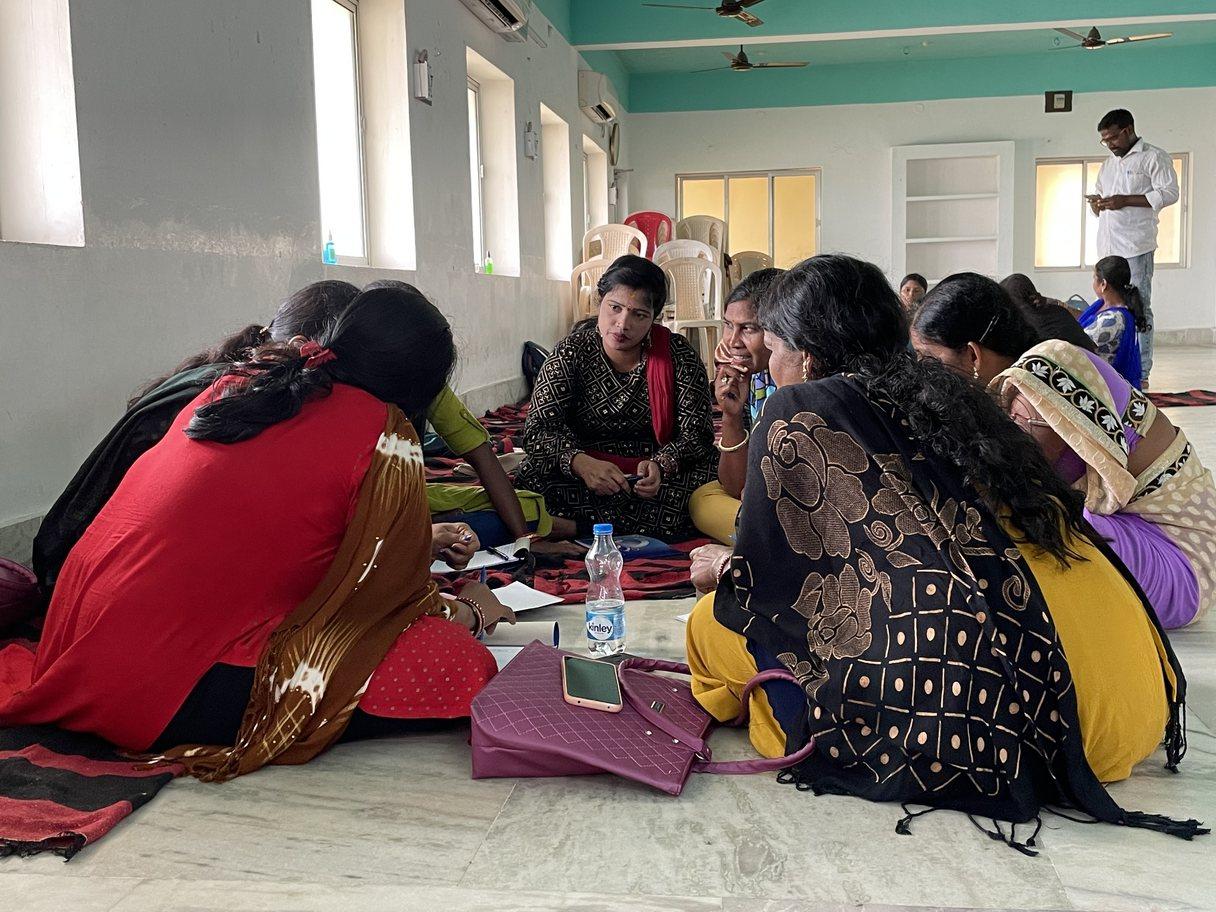
Behind every one of those figures is a local leader deciding what their community can afford to fix. In the Gram Panchayats that reached near-complete use of funds, leaders learned what they could spend, on what, and how to account for it. Then they spent it – quickly, without needing more money.
What changed
We now have a proof point: local understanding, not the level of funding, determines whether public money for water and sanitation reaches communities. That's a different case to make to a government or a financing partner than simply asking for more money.
What's next
India's experience reflects a challenge facing many countries: how to ensure that public finance translates into reliable services for everyone.
Our Asia programme is applying the same thinking elsewhere: in Assam, working with the state's Public Health Engineering Department on a financing strategy that accounts for the full lifetime cost of rural water services; in Bangladesh, bringing finance actors together to explore new ways to diversify funding as public investment declines and climate risk rises.
Understanding finance is proving as important as raising it. If grants are sitting unspent in your own systems, we'd welcome a conversation about how we can help.