Impact Story
Snapshot from 2025: Rwanda
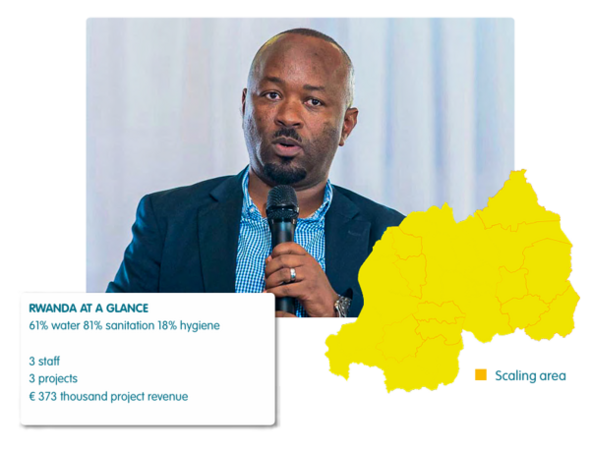
The numbers behind Rwanda's systems transformation
Through the Isoko y’Ubuzima project, we helped strengthen governance of water and sanitation in ten districts while supporting WASAC - Rwanda’s national utility - and the Ministry of Infrastructure to improve planning, regulation, and financing of services.
The results were both institutional and practical. Rwanda’s water and sanitation system building blocks score increased from 3.4 to 4.0, reflecting progress in policy, regulation, infrastructure management and finance. At the Ntora pilot site in Kigali, lessons from Odisha, India, informed concrete action: new district metering areas, bulk meters, and 12 kilometres of replaced pipelines slashed the share of water lost through leaks or taken without being metered from 41% to 23% in Kacyiru Branch and to 9% in one isolated area of Ntora. These improvements were implemented by WASAC with support from JICA.
We also coached WASAC staff to prepare bankable feasibility studies, trained 41 district officers in market-based sanitation, and supported the inclusion of Systems Academy courses in Rwanda’s universities. In districts, 138 board members responsible for water and sanitation oversight were trained to use community scorecards, giving citizens a stronger role in accountability.
Important challenges remain, including vandalism of infrastructure, weak urban sanitation systems, and funding gaps for rural projects, but the shift is clear.
“Kirehe District valued IRC’s support in joint planning and implementation, which equipped district staff and water and sanitation board members with the knowledge and skills required for inclusive planning.”
Modeste Nzirabatinya, Vice Mayor, Kirehe District