Impact Story
Snapshot from 2025: Mali
Standardising the cost of water and sanitation in healthcare
For years, Mali has had the roadmaps, the standards, and the WASH FIT evaluation tools for water and sanitation in healthcare. But no one knew how much it would cost to put these plans into reality. Prices for equipment and labour vary from one region to the next, and finding clean financial data can be a headache.
Under the leadership of the National Health Directorate (DGSHP), the national WASH Task Force composed of organisations such as IRC, World Vision, WaterAid, WHO, and UNICEF, shifted from estimation to evidence-based planning. At IRC, Mohamed Kané, Country Coordinator for the Mali office, served as the focal point. This was the birth of the WASH Costing Tool.
Our role was to turn technical ideas into a practical system. Instead of trying to solve every complex problem at once, we focused on finding a national average cost first. We identified more than 70 different cost lines, from physical pipes and toilets to staff training and the time needed to keep them running. We then helped structure the costs to match the minimum standards that every healthcare facility in Mali is expected to meet.
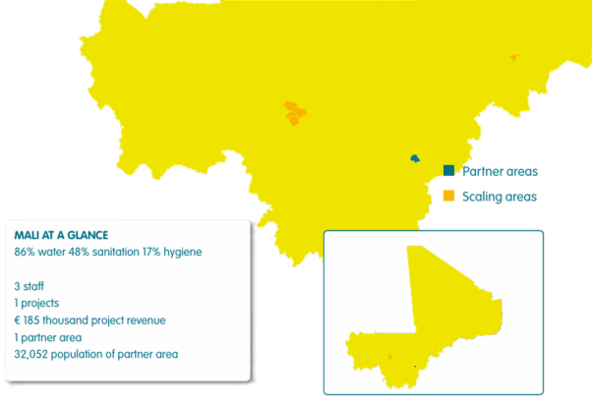
The real breakthrough came when the government, through the General Directorate of Health and Public Hygiene, decided this was a tool for the whole country, rather than just a project tool. Now, whether you’re a government official or an international partner, everyone will use the same framework to plan and advocate for funds.
We are now moving into the field, where Mohamed Kané, alongside representatives from partner organisations, is leading the testing of the tool across multiple regions of the country, including Koulikoro, Ségou, Koutiala, Sikasso, and Bamako. This phase involves validating the model in five health facilities by comparing estimated costs with actual market prices, ensuring that the tool reflects real-world conditions.
“With this tool, we are no longer just talking about the ambitions of WASH FIT; we are beginning to quantify exactly what is needed to make it a reality across the entire country.”
Mohamed Kané, Country Coordinator, Riva Mali