Impact Story
Snapshot from 2025: Bangladesh
Innovation in the face of climate change, flooding and salinity
Climate change is reshaping how people access water and sanitation – most visibly in the flood-prone Haor wetlands of the northeast and the saline-affected coastal belt.
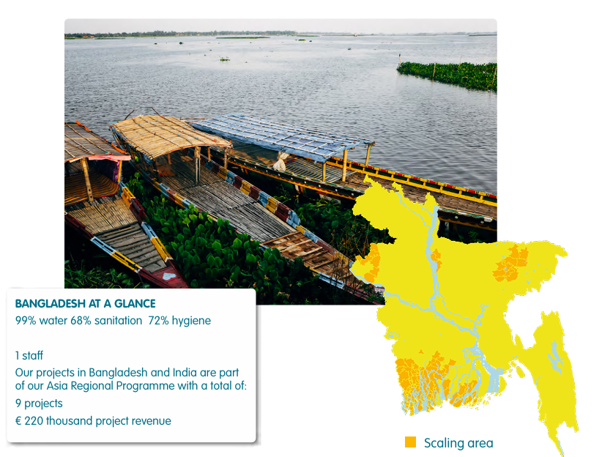
In the Haor, for nearly half the year, seasonal floods turn villages into islands. Toilets are washed away, pits collapse, and many households are forced back into open defecation. Together with BRAC, we launched an innovation effort to address this – supporting communities to adopt climate-resilient latrines, understand contamination risks and commit to becoming open defecation free. BRAC leads implementation on the ground: mobilising communities, forming local sanitation groups, and supporting households and sanitation entrepreneurs. We provide technical guidance, support troubleshooting, and ensure learning is captured.
We’ve developed two technical manuals – Sanitation options for Haor areas and Sanitation option for Haor areas: Septic tank – alongside a Bengali version of our community mobilisation guideline to improve sanitation. Progress is now being monitored on a monthly basis.
The BRAC–IRC Water Hackathon held in Dhaka in July 2025, focused on safe drinking water in climate-vulnerable coastal areas. We received more than 240 submissions, with 11 finalists pitching their ideas to a multi-sector jury. The winning innovation, JolBondhu, proposed a smart, community-driven water grid combining rainwater harvesting, reverse osmosis, and digital tools for local management. The runner-up, Atmospheric Moisture for Coastal Communities, explored capturing water during wet and dry seasons. Both solutions will be piloted through the BRAC–IRC programme.
“This Hackathon is a powerful way to capture the organic thinking of the young generation – what they truly think, unfiltered and full of potential. The ideas went beyond just technology and embraced social solutions as well.”
Professor Tanvir Ahmed, Hackathon jury member