Journal article
Water and emotion: testing a new approach for monitoring water security among Afar pastoralists in Ethiopia
Testing a new approach for monitoring water security among Afar pastoralists in Ethiopia
A new approach using emotional responses to assess water security among Ethiopia’s pastoralists, revealing vulnerabilities and opportunities for improvement
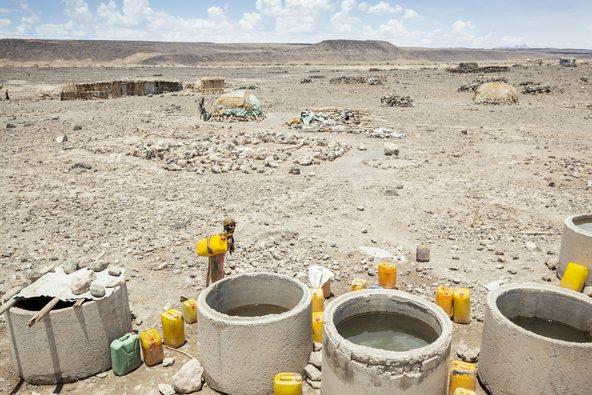
Ethiopia has over 12 million pastoralists that raise livestock and move their herds in search of fresh pasture and water. This way of life is especially vulnerable to climate change as drought and shifts in seasonal rainfall patterns are changing the distribution and availability of these resources in pastoralist regions. The dynamic use of water within these settings is also not well-understood or captured by conventional water sector monitoring systems, which prevents appropriate supportive interventions and policies to be delivered. This paper presents results from a study into a new approach to measuring water security that focuses on assessing the emotional response of pastoralist populations to their water security situation. Formative research involving focus groups and interviews was followed by a survey of 148 pastoralists to assess their emotional response to different water security dimensions. The results indicate that emotional response can be used to elicit valuable insights into water security and provide a powerful complement to conventional water security monitoring techniques. Using the approach, we show a strong relationship between variation in seasonal water access and reported emotional response. Negative emotions also strongly associate with the most laborious methods of collecting water such as scoop holes and hand dug wells, whereas positive emotions were associated with access to higher quantities of water. Access to equines for carrying water was associated with more positive emotional well-being indicating a route to water security improvement in this context could be through the provision of donkeys and mules for water carrying. The paper discusses the value of using an emotion-based approach to capture experiences of water security alongside more conventional objective measures, especially among populations with water use patterns that continue to be poorly understood. [author abstract]