Data matters only when it helps people make better decisions.
expert WASH governance + implementation specialist
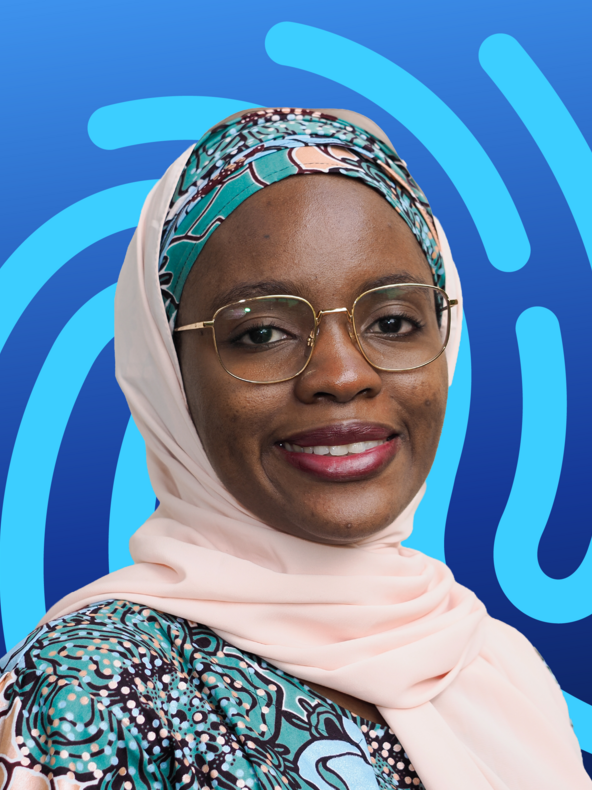
Sanata is part of a new generation of African systems professionals who move comfortably between evidence, people and practice. She sees climate risk, service performance and governance not as separate topics, but as interconnected parts of the same question: how can leaders make better decisions as pressure on water systems increases?
Sanata’s work centres on making reform ideas a reality. She turns field evidence into learning briefs, stakeholder analyses, evaluation findings, training materials and policy-oriented communications that support decision-making and action. In Mali, Burkina Faso and across the wider Sahel, she has supported reviews, sector learning processes, water and sanitation in healthcare facilities, and capacity strengthening of practitioners working in fragile, climate-vulnerable contexts. Her contribution lies in ensuring that technical knowledge informs the decisions and actions of government teams, programme partners, health workers, local actors and young professionals.
Sanata started her career in civil and environmental engineering, worked in construction, participated in the Young Expert Programme and later specialised in hydroinformatics and digital innovation at the Institute for Water Education (IHE) in Delft. This combination of experiences gives her a broad perspective. Her experience spans both infrastructure and the wider systems that sustain it. Alongside her engineering background, she is particularly interested in how data, climate information and governance influence the long-term performance of services. Fluent in French, English, Turkish and Bambara, she is able to work across linguistic, cultural and institutional contexts.
A few highlights
- 5+ years of work on water and sanitation systems strengthening, programme learning, evaluation and capacity strengthening in Mali, Burkina Faso, Niger and the wider Sahel.
- WASH Governance Expert / Communication, Advocacy and Learning Officer with Riva Sahel, supporting regional learning, policy-oriented communication and knowledge-sharing processes.
- Led or supported analytical reviews and learning products, including the Midterm Review of the Blue Deal Programme in Mali and Burkina Faso.
- Co-author of Collective action for safe water in the Sahel: Strengthening systems through strategic WASH master plans.
- Young Expert Programme alumna, with field experience in water, sanitation and hygiene in healthcare facilities, stakeholder coordination and practitioner training.
- Academic qualifications: MSc in Water and Sustainable Development from IHE Delft, specialising in Hydro-informatics and Digital Innovation; Bachelor Degrees in Civil and Environmental Engineering.
- Technical strengths include GIS, remote sensing, climate and water resources analysis, monitoring and evaluation, and the use of Python and Excel for data analysis and visualisation.
- Working languages: French, English, Turkish and Bambara.
Approach: