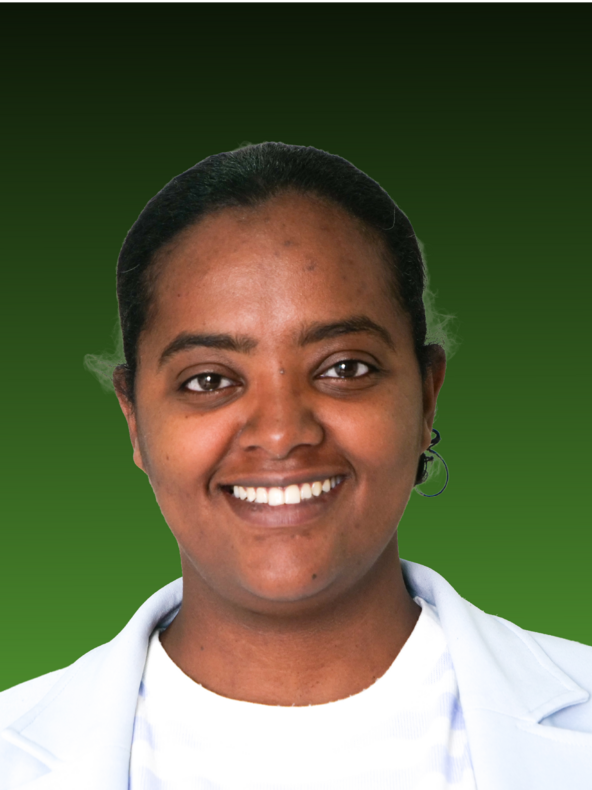
Betelhem Hailegiorgis
When water, sanitation and hygiene services fail, the problem is rarely one single missing piece. It's how the whole system works together.
Betelhem Gebeyehu
Betelhem Gebeyehu believes that the greatest barrier to sustainable and resilient public services is not technology but the gap between what institutions are expected to deliver and the systems they rely on to achieve it.
Betelhem has spent her career understanding why some public services continue improving long after projects end while others struggle to sustain progress. Her conclusion is clear: lasting change depends on whether governments have the evidence, leadership, and institutional capacity to keep learning, adapting, and making better decisions over time.
That belief has shaped her work across Ethiopia, helping local governments and development partners strengthen the systems that sustain services rather than focusing only on infrastructure. She works across the full programme cycle, from design and implementation to monitoring, evaluation, and organisational learning, giving her insight into how technical decisions, institutional incentives, and public policy interact and influence one another. Whether advising decision makers, supporting independent evaluations, or designing approaches to improve service sustainability, she looks beyond immediate outputs to ask what enables institutions to adapt and endure.
She holds an MSc in Environmental Sciences (Water Systems and Global Change) from Wageningen University and Research and a BSc in Civil and Environmental Engineering from Addis Ababa University.
Highlights
- More than nine years' experience in systems research, monitoring, evaluation and governance across Ethiopia.
- Experience in strengthening public institutions through evidence-based planning, performance assessment and organisational learning.
- Published author on rural water service sustainability, governance, systems thinking and market-based sanitation.
- Completed Netherlands Water Partnership, Young Expert Program (YEP), YEP Water, working with IRC WASH as learning/ research advisor.
- Working languages: Fluent in English and Amharic.