Event
Which segments of private sector in WASH are we talking about?
The sector has huge potential to engage private sector along all value chains of WASH services. But which segments of the private sector are we talking about?
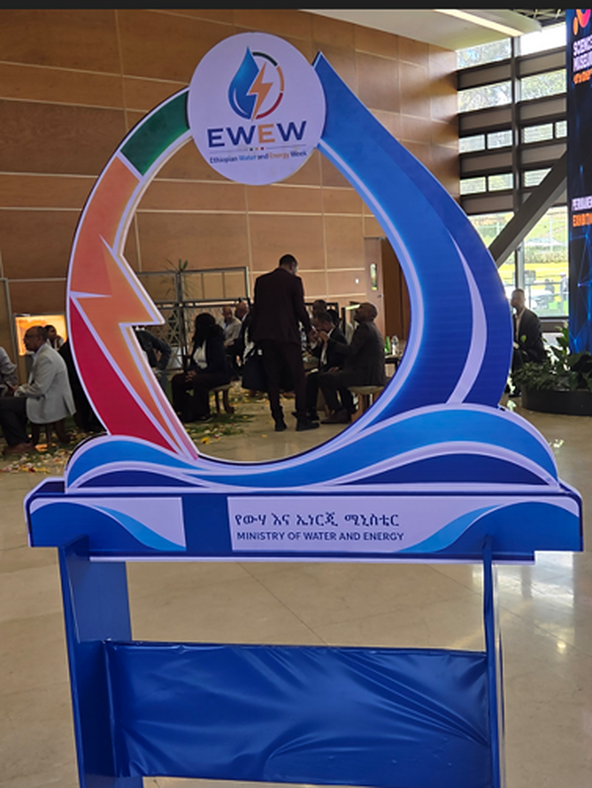
Ethiopian Water and Energy Week
Ethiopia had made significant progress in expanding access to water, sanitation and hygiene(WASH) services during the Millennium Development Goals (MDGs) period, achieving its national targets for the sector. Building on this achievement, the country entered the Sustainable Development Goals (SDGs) era with renewed ambition and a strong commitment to replicate and surpass its earlier success, adopting an ambitious vision of achieving universal and sustainable access to water, sanitation and hygiene services by 2030. This commitment has been reflected in increased government efforts, policy and strategic reforms, sector investments, and strengthened collaboration with development partners under the One WASH National Programme (OWNP). However, the transition from the MDGs to the more ambitious and comprehensive SDG targets has also brought greater challenges, requiring not only expanded infrastructure and service coverage but also stronger institutions, sustainable financing, improved service delivery models, and greater accountability to ensure that access is equitable, reliable and sustainable. The ambition to meet SDG targets in WASH does not happen without private sector- expertise, technology, finance and many more.
The country has recognised the roles of private sector in achieving universal and sustainable WASH services, and has been putting lots of effort into it despite the slow progress so far. Private sector engagement in WASH has a long history in the country: Contractors, consultants, manufacturers, distributors, operators and suppliers. The sector has huge potential to engage private sector along all value chains of WASH services. But which segments of the private sector are we talking about? The national ones, who are better off in technical and financial capacity to absorb shocks and bureaucracy, or the Micro and Small Enterprises (MSEs) who are close to communities in rural and urban areas running fragile businesses? In rural areas, the business fragility is even worse. The question “which segments of private sector are we talking about?” came to my mind while I was participating in the 3rd Water and Energy Week of Ethiopia held during 26- 30 October 2026 in Addis Ababa, where the first half day of the event was dedicated to private sector in the broader water sector and WASH. Proclamations, strategies and other regulatory frameworks about Private-public partnership (PPP) model were shared during the session. However, those PPPs are still about private businesses that are better off in capital and expertise already. I am not objecting to strengthening PPP, but we shouldn’t underestimate the roles of Micro and Small Enterprises (MSEs), who are sometimes voiceless despite the potential impact at scale they would bring to the sector.
Ethiopia’s experience in engaging MSEs in WASH
Be it local water vendors, water related goods suppliers and manufacturers (filters, chemicals, water containers or storage, sanitary pads, etc.), traditional well/latrine constructors, sanitation slab producers, plumbers, electricians, or big national consultants, contractors of different grades (Grade 10 to Grade 1), we can mention a lot; they are all private sector actors in WASH. Some are individuals, while others are in the form of Companies, Associations, Enterprises, etc. My focus is on MSEs roles in WASH. The market size for MSEs in WASH is huge, though there is no quantified figure at national level; some studies indicate that there are 6,000 registered WASH MSEs only in six towns excluding Addis Ababa (Business landscape and growth determinants of micro- and small enterprises working in WASH sector: evidence from Ethiopia | Journal of Innovation and Entrepreneurship | Springer Nature Link), while for the latter unpublished report estimated at more than 9,000 WASH MSEs. One can imagine how big the employment opportunity the sector has beyond contributing to improved and sustainable WASH services. I personally feel WASH hasn’t utilised the full potential of MSEs as compared to other sectors such as construction and manufacturing in the country. Both the Ministry of Water and Energy and the Ministry of Health, as well as other development partners, have put lots of effort into identifying, training and establishing WASH MSEs down to woreda/town levels. These MSEs include spare part suppliers, WASH facility constructors and maintenance service providers, WASH product producers/manufacturers/suppliers, etc. The model and approach of supporting the WASH MSEs vary involving a mix of different skills, technical and entrepreneurial capacity, startup capital (including cash, equipment and transport facilities, etc.)
Despite all these efforts, the challenges for potential WASH MSEs still persist, including startup capital, capacity (entrepreneurial skills and knowledge), perception of the WASH business, policy implementation, etc.
During the 3rd Water and Energy Week of Ethiopia, national consultants and contractors have suggested the establishment of associations to promote standards, professional ethics, fair competition, professional certification, accountability, tax privileges for imported goods, etc for those national WASH businesses; these are all encouraging suggestions. However, my personal feeling is that those local service providers such as MSEs were out of focus during the discussion and in the suggestion.
Misconceptions in private sector engagement in WASH
Sustainable WASH services demand different disciplines and experts at different levels: The misconception starts from alluding the sector to being engineering and high tech dominated. Considering the entire value chain of WASH services, it demands different disciplines, expertise and aspects to ensure sustainable services.
Leaving WASH solely to technical experts: Technical leadership is important, but it cannot drive progress without political engagement. As a foundation for public health, socio-economic development, justice and human rights, WASH requires political commitment and leadership at every level, from local to national. Good examples are the ongoing urban greenery and road corridor development as well as river side development, Total Sanitation to End Open Defecation and Urination (TSEDU) in Ethiopia. Someone can imagine the employment opportunities that these initiatives have unlocked through the private sector.
Perceiving WASH infrastructure development as a successful narrative: Having WASH infrastructure in place is good for first time access, but it doesn’t guarantee sustainable services. The common procedure for indicators in WASH is the number of people covered per the infrastructure we develop; of course, having the right infrastructure is the first step in ensuring the services. Key Performance Indicators (KPIs) for WASH need to be redefined both at a national and subnational levels to accommodate service indicators such as reliability, quality, quantity, and distance WASH value chains beyond infrastructures demand huge engagement of small businesses such as MSEs.
Perceiving WASH as consumptive, not as an economic sector: The employment opportunity and the business aspects of WASH is overshadowed by its social contribution, which needs to be redefined in our narration to unlock the business opportunity of the sector.
One size does not fit all: Universal and sustainable WASH services require approaches and technologies tailored to local contexts, including water sources and settlement patterns. Although the SDGs call for safely managed water services for everyone, achieving this remains challenging. Centralised piped systems suit some settings, but not all. Where they are not feasible, decentralised options, such as public water points and self-supply, can offer interim or long-term solutions. These depend on local service providers, including MSEs. Many formal and informal businesses already provide decentralised WASH services, including self-supply.
In all cases, there is huge potential to engage businesses, particularly MSEs in ensuring sustainable WASH services. There are experiences already on which we can consolidate and capitalise: In 2004, there was a national initiative, mainly funded through World Bank, to establish spare part suppliers, maintenance service providers and constructors in selected woredas in the country; they were called Local Service providers (LSPs) and Technical Service providers (TSPs); even if different names have been used by different actors, they are all Enterprises of different categories Later on different development partners such as AfDB, USAID, INGOs and regional governments continued to build on those experiences to bring local service providers to the forefront. What they all have in common: training, working capital provision, means of transport (motorbikes), maintenance hand tools, moulds for sanitation slab production, etc. However, they all lack packaging the support, and sustaining those businesses. Of course business diversification, expansion of service areas to a cluster of Woredas and towns were some of the exercises to overcome the seasonality and the challenge of market size, but most of those enterprises couldn’t go beyond a project cycle that supported them.
Recommendations
Micro, and small enterprises usually operate in a smaller service area than national or multi-national private sector actors; however, they are familiar with the local context, quickly fix issues, are impactful and are everywhere as they are part of the local communities. If we want to bring a critical mass impact in WASH by engaging the private sector, it is compulsory to encourage and support MSEs. Recognising these, the following actions are recommended:
Rapid national assessment on the barriers to MSEs’ engagement in WASH, and respond to those barriers by leveraging on the past and on-going similar initiatives. The WASH sector needs to learn from other sectors such as manufacturing and construction that are progressing well in the engagement of MSEs. Encourage and support local service providers, including MSEs at every level: Community, Kebele, woreda, zone and region for them to get working space, startup capital through loans, business development/business plan and market linkage.
Establish MSE associations like in Amhara region; be flexible by considering the context in setting criteria for establishing, licensing and regulating MSEs in WASH, as the business is not matured yet.
Utility operators, national consultants, manufacturers, suppliers and contractors need to engage SMEs through subcontracting, franchising the businesses in such a way that national -local/community level WASH businesses are connected and reenforce each other.
Government should Identify barriers related to the enabling environment such as policy, loan, and taxation hindering MSEs’ engagement and respond to them. Additionally, good to support MSEs at different levels by providing them with working space, working capital, a reasonable tax grace period, and setting context-specific criteria.
Development partners ought to build on the existing initiative, fill the gaps others couldn’t, and think beyond a project life for maturity and graduation of MSEs when you design similar project/program. Disparity of interventions including market distortion particularly during emergency responses (free hand over or non-smart subsidy, etc) needs attention.