Article
Welcome to Riva Africa
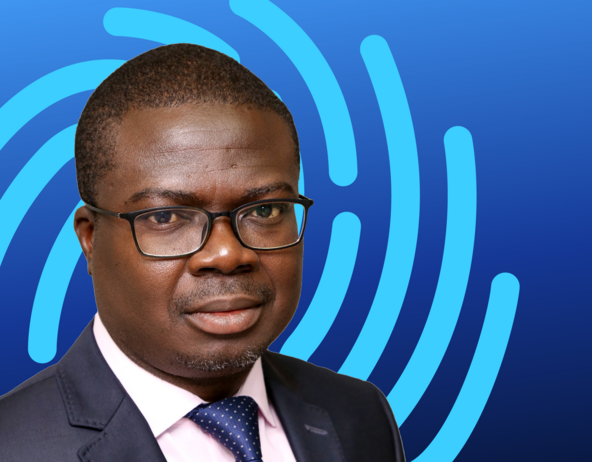
Dr Gbèlidji H. Juste Nansi, Director, Riva Africa explains why Riva Africa matters
Riva Africa is an African advisory platform for the transformation of public service systems. We work with those who carry sovereign responsibility for reform. Discover why this defines Riva Africa's purpose.
Welcome to Riva Africa
The African Union's High-Level Panel on Water Investments has costed that destination and shown where the money sits. Of the USD 30 billion a year the continent needs, some USD 29 billion can be raised through sector governance and domestic resource mobilisation: efficiency gains and stronger tax effort, responsible tariffs, government budgets, national development banks, institutional investors. Africa's water future will be financed primarily by Africans — raised by institutions capable of generating it and enlarged by the confidence that capability earns.
Building those institutions is our work.
Riva Africa is an African advisory platform for the transformation of public service systems. We work with those who carry sovereign responsibility for reform — presidencies and finance ministries, sector ministries, regulators, utilities and service authorities — on four things that decide whether a system holds:
- Leadership — political direction that carries a commitment through to execution, with finance and planning ministries in the room.
- Regulation and accountability — regulators with the mandate and the independence to set predictable rules and enforce them.
- Professionalisation — the technical, managerial and financial capacity to actually run a service, at every scale from the national utility to the small town.
- Strategic public finance — tariffs, subsidies, budget allocation and creditworthiness handled as one architecture rather than four separate decisions.
These are the Vision's own priorities read as an operating agenda: governance systems, capable institutions and transformative leadership (Vision Statement 4); human capital and adaptive learning (Vision Statement 7); water and sanitation raised within national economic planning, investment and financial allocation (Vision Statement 8). Worked together, the four produce institutional and financial credibility. Long-term capital moves on that condition, and systems that function turn it into services outlasting political cycles.
These are the Vision's own priorities read as an operating agenda: governance systems, capable institutions and transformative leadership (Vision Statement 4); human capital and adaptive learning (Vision Statement 7); water and sanitation raised within national economic planning, investment and financial allocation (Vision Statement 8). Worked together, the four produce institutional and financial credibility. Long-term capital moves on that condition, and systems that function turn it into services outlasting political cycles.
None of this is a matter of persuading governments to care. Where the will to reform exists, what is usually missing is the means: design, specialist expertise, accompaniment through execution. That is what carries a decision from cabinet to delivery, and that is what we supply.
Building African institutions is our work
Where the will to reform exists, what is usually missing is the means: design, specialist expertise, accompaniment through execution. That is what carries a decision from cabinet to delivery, and that is what we supply.
Dr Gbèlidji H. Juste Nansi, Director, Riva Africa
Riva Africa works today with AMCOW, the African Union Commission, the African Development Bank, the Africa Water Investment Programme, ESAWAS, AfWASA and the Global Water Partnership — advising on the institutional and financing architecture of the continental agenda.
We work as an architect. Three things hold whatever the contract: the mandate belongs to an African institution, our method governs the work, and we keep the latitude to say what we actually think — the only reason advice is worth paying for.
Riva Africa sits within the Riva Network alongside members rooted in their own countries — Burkina Faso, Mali and Niger, Ghana, Ethiopia, Uganda, Rwanda. They are not branches of ours and we do not sit above them. The division of labour is functional rather than hierarchical: work anchored in a single national context belongs to the member who lives there, while Riva Africa carries what needs standing across several countries at once — continental institutional relationships, cross-country method, basin mandates. Where a member is present, the national relationship is theirs and we work beside them.
Water and sanitation are our anchor, where decades of engagement built the credibility, we now put to work. The same four things decide the outcome wherever a state is trying to make an essential service function.
The Vision's first implementation pathway runs from 2026 to 2033. If you carry responsibility for a system that has to work and cannot yet attract the finance it needs, we can help. Contact us, we’re keen to talk.
Dr Gbèlidji H. Juste Nansi,
Director, Riva Africa