Article
WASH Debate: Partnerships for transformation
Building a more financially credible water and sanitation sector together.
Partnerships drive transformation
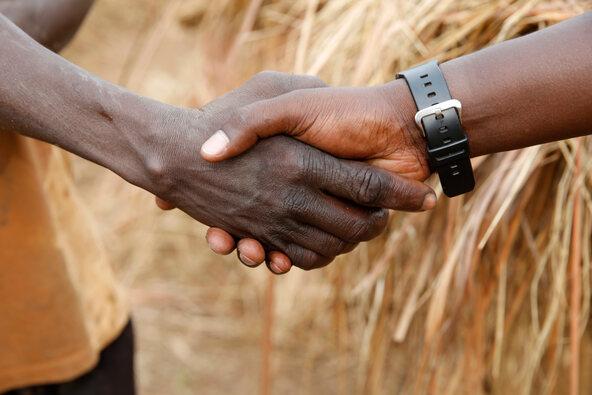
This WASH debate seeks to showcase some of the successful partnerships that have enabled – or hold the promise to enable – the transformation of public water and sanitation services in Africa. In addition, we look to the future, examining new types of partnerships that may be needed, or how the content of the partnerships may need to evolve.
Background and event focus
The Africa Water and Sanitation Systems Leadership Symposium will be held from 17-21 August 2026 in Kigali, Rwanda. Convened by AMCOW and the Government of Rwanda, and facilitated by IRC, it seeks amongst others to facilitate partnerships that enable the water and sanitation sector in Africa to become more financially credible. That means that services are provided by high-performing professional organisations; that their financial performance is one that attracts concessional and (domestic) commercial finance; and that at the foundation, they are supported by institutional reforms and political leadership. Partnerships of all kinds—technical, financial, institutional—catalyse and accelerate change. The Dutch water sector has a long tradition of partnering with the sector across many countries, including those in Africa. These range from brokering between financial institutions and utilities, to water operating partnerships that have drastically improved the performance of service providers; or partnerships with (local) governments leading to reform.
Specific questions are:
- What elements of partnerships between African and Dutch organisations have enabled the true transformation of the way water and sanitation services are provided? And what evidence do we have of that?
- What should be the focus within partnerships in the years ahead to support further reforms towards a more financially credible water sector?
- What do Dutch organisations have to offer?
These questions will be examined through short case presentations from a range of partnerships; followed by a panel debate.
About the programme
This WASH debate features a vibrant mix of speakers and panellists. The debate will start with a keynote presentation by Rick Elmendorp, Director of the Netherlands Water Partnership, who will provide an overview of partnerships between Dutch and African water sector organisations, drawing on the work of NWP's members over recent years. It will also provide insight into changing demand for partnerships in Africa.
To best showcase the breadth of collaboration happening across Africa, the debate will host five quick snapshot examples highlighting how partnerships are already contributing to transformational change. A panel discussion and Q&A will reflect these presentations. The event will close with an exciting announcement around IRC's evolution. For those of you joining us in-person, the event will be followed by drinks and snacks.
"Beyond the water sector", reflects on how public-private water partnerships are evolving from standalone projects toward integrated resilience ecosystems, and what this means for the future role of collaboration, coalition building and international water partnerships.
Featuring
Rick Elmendorp is director and chair of the Netherlands Water Partnership (NWP), the Dutch network organisation that connects public, private, research, knowledge and civil society actors across the water sector. In this role, he works at the intersection of water, climate resilience, international cooperation and strategic partnership development. Over the past years, he has focused increasingly on strengthening cross-sector collaboration and building international coalitions, particularly in climate-vulnerable regions.
His work centres on connecting water expertise to broader agendas such as food security, climate adaptation, urban resilience and sustainable economic development. In addition to his role at NWP, Rick serves on the boards of several organisations active in circular economy, sustainable food systems and innovative finance, including the Nutrient Platform and, until recently, KIFFWA, the Kenya Innovative Finance Facility for Water.
Clement Ndungutse is a Rwandan WASH specialist and engineering leader with over a decade of experience in water sector regulation, infrastructure development, institutional strengthening, and programme management. He has contributed significantly to the professionalisation of water services in Rwanda, strengthening public-private partnerships, improving utility performance, and supporting strategic sector reforms.
He is recognised for combining strong technical expertise with strategic leadership to advance sustainable service delivery and drive transformative change across the water sector.
Mark Peters brings over 30 years of global experience in urban water utility reform, sustainable infrastructure finance, and WASH systems strengthening across Africa, Asia, Latin America, and the Middle East and North Africa. He has led large-scale programmes focused on improving utility performance, creditworthiness, and access to blended and climate finance.
Prior to joining Urban Water Catalyst Initiative, he served in senior leadership roles with USAID and international organisations, overseeing complex, multi-country portfolios and building partnerships across governments, donors, and the private sector.
Olivier Kanangire works as Senior WASH governance Expert at IRC under the Isoko y'Ubuzima project in Rwanda. He holds a master's degree in environmental science with specialisation in Water Quality Management from UNESCO-IHE, Institute for Water Education, Delft, The Netherlands. He has a Bachelor Degree of Science with Education from Kigali Institute of Education with Physics and Chemistry as major courses.
He has a relevant educational and professional background in water and wastewater treatment processes, faecal sludge management, water quality assessment and monitoring, decentralised water supply and sanitation, preparation of water and sanitation development projects and project management in water management context with more than 14 years working experience in the WASH sector in Rwanda.
Marieke van Nood is Director of the Blue Deal Programme, an international collaboration in 15 countries between Dutch Water Authorities and global partners aimed at providing 20 million people with safe and sufficient water by 2030. She brings extensive experience in international water projects and policy, including work with the European Commission, the Dutch government and project implementation from Addis Abeba to Japan.
Trained as a civil engineer, she is passionate about simplifying complexity and in strengthening resilient water management worldwide. She strongly believes that public water institutions are a key piece of the puzzle—bridging technical expertise, governance, and sustainable finance.
Olivier Germain is a water and sanitation expert with a Master's degree in Development Management from the London School of Economics, and a certificate in Water Resources Management from SOAS. He has over 20 year's work experience in international development, specifically in the water, sanitation and hygiene (WASH), nutrition and environment sectors, working in Africa, Asia, the US and Europe.
He currently works with SNV in Tanzania as the Water Sector Leader, overseeing a combination of projects on WASH systems strengthening, sanitation service delivery models and water resources management. A key component of these programmes is building partnerships, strengthening organisational leadership and fostering informed choice decision-making.
Ingeborg Krukkert has worked in international collaboration related to water/sanitation/governance since 2000. She worked at IRC WASH for more than 20 years. Her last position focused on the Sahel region and India and Bangladesh. She is currently advisor international collaboration for water-related programmes at RVO, the Netherlands Enterprise Agency and partner in sustainable development.
One of the programmes is a government-to-government programme in Niger called PROVANI, Programme Vallée du Niger. A locally led programme focusing on improving the living conditions of people in the Niger River basin. She is also focal person Burkina Faso for the Reversing the Flow programme, another locally led programme with partners in five countries: Bangladesh, Burkina Faso, Ethiopia, Kenya and Sudan.
Asaph Kabaasha is the CEO of WASAC Group Ltd and a water and sanitation specialist with over 18 years of experience in utility operations, water infrastructure, and sector management. Prior to his current role, he served as Project Manager at VEI B.V., leading partnerships with WASAC and other water sector stakeholders in Rwanda.
He holds a PhD in Civil Engineering from University of Cape Town, with research focused on leakage modelling in water distribution networks. He also earned master's degrees from IHE Delft Institute for Water Education and Asian Institute of Technology, as well as a bachelor's degree in civil and environmental engineering from Kigali Institute of Science and Technology (KIST). He previously served as a Board Member of the Rwanda Water Resources Board from 2020 to 2025.
Pim van der Male is passionate development practitioner with 30 years of experience. He has worked for NGOs, the UN and the Netherlands Government in various roles, both abroad and at headquarters level. He has worked on policy dialogue, policy development and portfolio management, seeking the connectivity between water, food security and climate.
After almost 5 years as deputy head of cooperation and First Secretary for Water and Food and Nutrition Security in Kenya, he currently coordinates the DGIS WASH team. He likes connecting and motivating people to positively impact the lives of those who need it most.
Stef Smits has 25 years of professional experience in water supply and sanitation in over 25 countries in Europe, Latin America, Southern Africa, and South Asia. His main thematic expertise includes: institutional models for water supply, sustainability and enabling environment, monitoring, costing and financing of services and integrated water resources management.
Stef has led numerous projects on these topics, and published about them. In addition, he has ample management expertise: from consultancy assignments to multi-annual programmes, and units within an organisation. He has worked for a range of clients including bilateral donors, development banks, research funders and NGOs. Stef holds an MSc degree in Irrigation and Water Engineering from Wageningen University, The Netherlands.