Article
The future of country collaboration in WASH
Reflections from an Agenda for Change meeting in Nepal
How Nepal's WASH collaboration evolved from coordination into institutional influence.
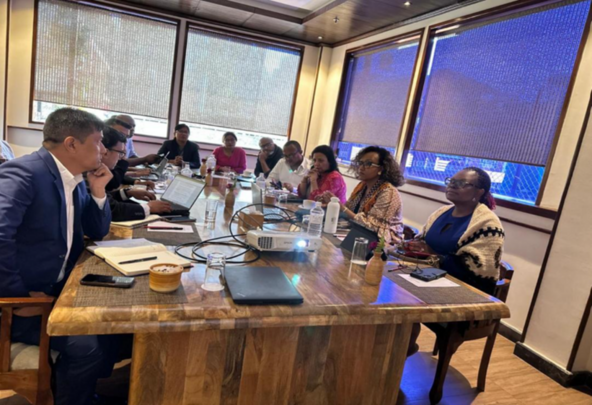
The Agenda for Change (A4C) meetings held in Kathmandu, Nepal on April 6-7, 2026, offered more than a country update, they provided a powerful illustration of how collaborative platforms can evolve into drivers of national WASH systems reform. The experience in Nepal stood out as one of the clearest examples of what mature, government-aligned country collaboration can achieve when a partnership moves beyond coordination into institutional influence. What emerged from the meeting in Kathmandu was not simply a story of project implementation, but of a country collaboration steadily becoming a strategic actor in sector transformation.
From partnership platform to sector influencer
Since its formation in 2021, Nepal’s A4C collaboration has grown from a small coalition of four INGOs into a diverse alliance of eight members that now includes national organisations such as FEDWASUN, representing water user committees, and WASH Khabar, Nepal’s dedicated WASH media platform.
This diversification matters. It signals a deliberate move towards localisation, bringing citizen voices, local institutions, and national accountability actors into the heart of sector reform. Nepal is demonstrating that effective collaboration in WASH must extend beyond international NGOs and become rooted in domestic systems and actors.
Government ownership has become Nepal’s defining strength
Perhaps the most striking lesson is the depth of Nepal’s government engagement. The Ministry of Water Supply and related government departments are no longer passive recipients of technical support, they are actively seeking out Agenda for Change as a trusted partner for strategic sector work. This includes:
- Requesting technical support for regulatory reform,
- Co-developing national WASH strengthening tools,
- Endorsing and integrating A4C-developed training manuals into official government systems.
This shift is significant because it reflects institutional trust. Nepal’s A4C collaboration has moved beyond advocacy towards co-governance of reform processes. That is where real systems change begins.
Evidence has become the currency of reform
A major strength of the A4C model in Nepal is its disciplined use of evidence. The collaboration’s WASH systems capacity assessment across eight municipalities became a turning point. Rather than producing data for reporting alone, they translated assessment findings into:
- National Joint Sector Review recommendations,
- Local government reforms,
- Stronger municipal accountability mechanisms.
This experience reinforced a vital lesson for all country collaborations: evidence becomes transformative only when linked directly to policy and decision-making processes. Agenda for Change in Nepal has succeeded in making that connection.
The five-year roadmap changes the game
One of the most important milestones presented in Kathmandu was Nepal’s five-year A4C roadmap, a jointly developed strategic framework that now guides collective action across the sector.
This roadmap is significant because it replaces fragmented interventions with shared long-term direction. Built around systems strengthening, climate resilience, inclusion, financing reform, and institutional coordination, it gives A4C Nepal a coherent reform architecture that aligns members around common priorities.
In many ways, this roadmap represents A4C’s transition in Nepal from collaborative dialogue to strategic national influence.
Public goods that will outlive projects
Another defining feature of progress in Nepal is the production of sector-wide public goods. The collaboration has already helped generate:
- A WASH Systems Strengthening Framework,
- Government-endorsed training manuals,
- Local government guidance tools,
- Technical support for sector regulations.
These are not short-lived project outputs. They are institutional assets that can continue shaping the sector long after individual grants end. This is a powerful reminder that sustainable reform depends on creating systems tools, not just delivering activities.
Challenges remain: Growth needs structure
Despite its achievements, the A4C collaboration in Nepal still faces real constraints:
- No dedicated secretariat staffing,
- Heavy reliance on voluntary member coordination,
- Limited pooled financing,
- Government staff turnover affecting continuity.
These challenges matter because mature collaboration requires stronger institutional backbone. As A4C Nepal’s influence expands, investment in coordination capacity will become increasingly necessary.
The next frontier: Influencing big finance
The meeting in Kathmandu also highlighted Agenda for Change’s next strategic frontier, engaging major financing institutions such as the Asian Development Bank, World Bank, and UN agencies. The collaboration is now well-positioned to become a bridge between: government priorities, financing institutions, and implementation systems. If achieved, this would elevate A4C Nepal from policy influencer to financing systems intermediary, a major leap in sector leadership.
Why A4C Nepal matters beyond Nepal
The experience in Nepal offers valuable lessons for other country collaborations across the Agenda for Change network:
- Rotate leadership to sustain shared ownership
- Build trust before pushing reform
- Anchor collaboration in government systems
- Use evidence strategically
- Invest in products that strengthen institutions
The meeting in Kathmandu made one thing clear, Nepal is no longer just participating in Agenda for Change, it is helping define what effective country collaboration can look like globally. The deeper lesson is universal, sustainable WASH reform happens when collaboration evolves from meetings into institutions, and from projects into systems leadership.