Article
Fort Portal hosts Uganda's first regional WASH CSO forum
When water, sanitation, climate resilience and community leadership come together, the result must be more than conversation. It must be action that transforms lives.
For three days, Fort Portal Tourism City, the heart of the Rwenzori sub-region and home to Riva Uganda’s focus districts of Kabarole and Bunyangabu became a meeting point for ideas, innovations and partnerships shaping the future of water, sanitation and hygiene (WASH) in Uganda.
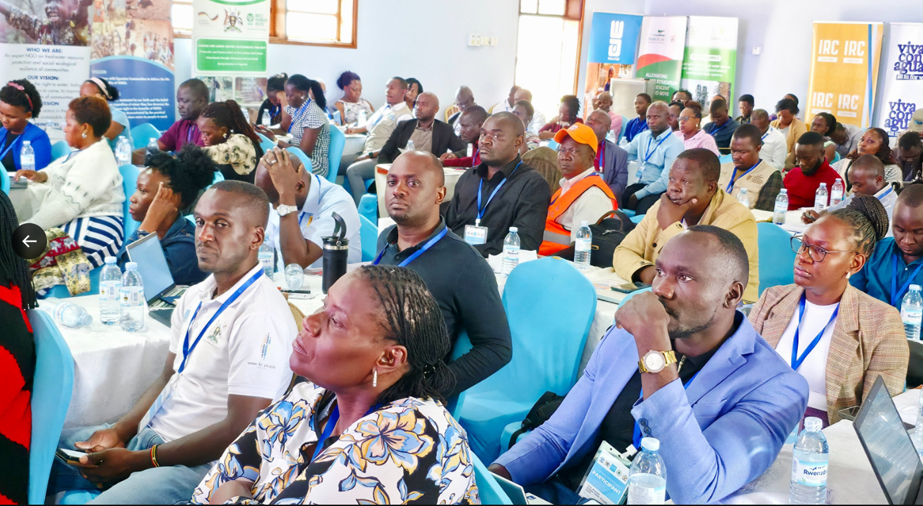
The 16th Annual WASH Civil Society Organisation (CSO) Forum, held from 6–8 October 2026 under the auspices of the Uganda Water and Sanitation Network (UWASNET), brought together civil society organisations, government representatives, development partners, local governments, and other sector stakeholders. This year’s gathering marked a significant milestone: for the first time, the annual forum adopted a regional hosting approach, bringing the national conversation to Uganda’s Mid-Western/Rwenzori sub region. Convened under the theme “Advancing Climate-Resilient WASH Programming: CSO Contributions to the Realisation of SDGs and NDP IV Targets in Uganda,” the forum challenged participants to look beyond the construction of water points and sanitation facilities and ask a more fundamental question: are the systems we are building resilient enough to keep serving communities as the climate changes?
For Riva Uganda, the forum held particular significance. As the current Chair of the UWASNET Board, Riva Uganda was privileged to contribute to a platform that connects local experience, national policy and collective action towards more sustainable and equitable WASH services.
A royal opening, a shared responsibility
The forum was officially opened by His Majesty Edward Rukidi Nyabongo I, the King of Tooro Kingdom, whose presence underscored the importance of protecting the natural resources on which communities, livelihoods and the region’s tourism economy depend. His Majesty highlighted the connection between environmental conservation, water security and the prosperity of Tooro. From the region’s rivers and wetlands to its forests and other ecosystems, the message was that protecting the environment is not separate from delivering water and sanitation services, it is fundamental to their long-term sustainability.
The King also emphasised the importance of community engagement, cultural leadership and collective responsibility in addressing environmental degradation and other social challenges affecting the region. His remarks set the tone for three days of engagement around a shared understanding that climate-resilient WASH requires more than infrastructure. It requires communities that are engaged, institutions that work together, and ecosystems that are protected.
The forum concluded with remarks from Dr Alfred Okot Okidi, Permanent Secretary at the Ministry of Water and Environment, accompanied by senior ministry officials, including Eng Dr Frank Kweronda, the Commissioner for Water Utility and Regulation and Mr Masaba Andrew, the Acting Commissioner, Planning, Investments, Statistics and Monitoring and Evaluation. Representatives from the ministries responsible for Health and Education and Sports, alongside local governments and development partners, further reinforced the importance of cross-sectoral collaboration. Their participation demonstrated the value of bringing government and civil society into the same conversation, not simply to share progress, but to identify persistent challenges and agree on practical ways forward.
Taking the conversation beyond the conference room
One of the defining features of the forum was the opportunity to see WASH and environmental interventions in action. Before the main discussions, participants visited selected programme sites across the region, observing community-led initiatives, engaging with implementers and examining how different approaches are addressing local challenges. The visits brought the forum theme to life, demonstrating that some of the most useful lessons emerge not from presentations alone, but from seeing what works, understanding what remains difficult and listening to the people who experience these interventions every day.
Protecting catchments to protect water supplies
In the Mpanga catchment, participants explored wetland restoration and nature-based solutions aimed at safeguarding water resources and strengthening climate resilience. Wetlands and other ecosystems play a critical role in regulating water flows, reducing sedimentation and supporting water quality. Their degradation can increase pressure on water treatment systems and expose communities to greater risks from flooding, erosion and changing rainfall patterns. The discussions highlighted the importance of combining ecological restoration with community mobilisation, engagement of local leaders, physical demarcation and partnerships between civil society, government agencies and local governments.
Participants also examined the relationship between catchment conservation and water service delivery, including the potential to reduce treatment and maintenance pressures on water supply systems. The lesson was compelling that investing in the protection of water sources is also an investment in the reliability and sustainability of the services that communities depend on.
Turning sanitation challenges into opportunities
The field visits also showcased approaches to sanitation improvement and faecal sludge management, including the reuse of treated waste products in agriculture. Through initiatives supported by Caritas Fort Portal-HEWASA, participants explored efforts to address sanitation gaps while creating opportunities for resource recovery and circular-economy approaches. The discussions recognised the potential benefits of producing organic manure, alongside the need for appropriate treatment, effluent quality monitoring, improved technology and stronger market acceptance of recycled products.
Challenges remain, including plastic contamination, manual processing, competition from conventional fertilisers and cultural reservations about using products derived from human waste.
Nevertheless, the examples demonstrated how sanitation can move beyond waste disposal towards approaches that recover value, support livelihoods and contribute to environmental sustainability.
Water services that work beyond construction
Other field visits focused on rural water supply systems, community management, operation and maintenance, tariff arrangements and innovative technologies. Participants examined solar-powered piped-water systems, prepaid water arrangements, community contributions and approaches that bring service providers and local governments into the management of water infrastructure. Household clusters were another important learning point. By bringing groups of households together to save, borrow and support one another, these approaches can help families access sanitation facilities and improve their ability to afford essential WASH services.
The broader lesson was that infrastructure alone does not guarantee a sustainable service. Reliable water supply depends on clear management arrangements, affordable tariffs, timely maintenance, functioning supply chains, community ownership and financing that extends beyond the initial construction phase. These are precisely the questions that climate-resilient WASH programming must address if investments are to continue delivering benefits long after projects close.
Innovation in the spotlight: Making water systems more reliable
The forum also created space for practical innovations designed to address persistent service delivery challenges. During the discussions on climate-smart water supply, participants explored the Poldaw riser-pipe system, an innovation presented by WaterAid Uganda. The technology adapts components of the India Mark II handpump system, using modified non-corrosive pipe materials and improved joints to address problems associated with corrosion, frequent breakdowns and high operation and maintenance costs.
The presentation highlighted the importance of testing innovations, documenting their performance and supporting their wider uptake through technical validation, training and collaboration with district and sector institutions. Participants also discussed the need to assess climate risks when selecting technologies and designing water systems. Considerations include changing groundwater levels, water quality, alternative sources, storage, spare-parts availability and the capacity of local mechanics to maintain the systems.
The conversation reinforced an important principle that an innovation is only as useful as its ability to deliver safe, reliable and affordable services in the conditions where communities need it most.
The challenge now is to move promising solutions beyond isolated demonstrations by strengthening evidence, technical capacity, financing and institutional support for wider adoption.
Confronting WASH inequalities: Evidence must lead to action
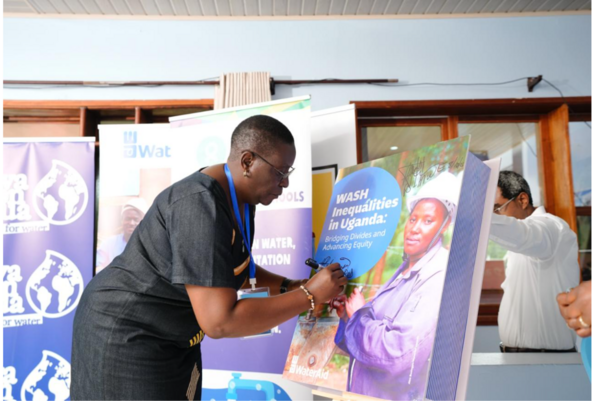
A major highlight of the forum was the presentation and launch of the study on WASH Inequalities in Uganda: Bridging Divides and Advancing Equity. The study examined inequalities in access to WASH services across 16 districts, assessing 64 institutions and considering service conditions in households, schools and healthcare facilities. Its findings and discussions highlighted how geography, poverty and other overlapping disadvantages can shape people’s ability to access adequate WASH services. Rural and remote communities, as well as poorer households, often face particular barriers relating to service availability, accessibility and affordability. These inequalities matter because the people facing the greatest challenges are often those least able to absorb the consequences of unreliable water supplies, inadequate sanitation and poor hygiene conditions.
The forum challenged stakeholders to use evidence to guide decisions about where investments go, which populations are prioritised and how services are designed. For civil society organisations and government alike, the message was that monitoring should do more than count facilities constructed or people reached. It should help identify who remains underserved, why inequalities persist and what needs to change. Climate-resilient programming must also be equitable. Investments should not only withstand climate shocks, they should reach the communities most exposed to those shocks and least able to recover from them.
Government and civil society: From coordination to accountability
Beyond the technical sessions, the forum provided an important platform for dialogue between civil society and government on sector coordination, reporting, financing and sustainability. In his engagement with participants, the Permanent Secretary at the Ministry of Water and Environment emphasised the importance of stronger collaboration between CSOs, local governments and the Ministry throughout the project cycle, from planning and implementation to handover, operation and maintenance. A water supply system cannot be considered fully sustainable if the responsible district authorities do not know how it was developed, how it should be operated or what support will be required after the implementing organisation exits.
The discussions also highlighted the importance of accurate and timely reporting on CSO investments and activities. Reliable information enables government and local governments to understand who is doing what, where resources are being invested and where gaps remain. Improved reporting is therefore not merely an administrative requirement. It is a foundation for better planning, accountability, more effective coordination and evidence-informed resource allocation.
Participants were encouraged to strengthen their engagement with government structures, meet applicable regulatory and reporting requirements, and pursue opportunities for joint planning, monitoring and implementation.
In a context of constrained funding, the forum also underscored the importance of using available resources more strategically, exploring domestic financing opportunities and building partnerships that combine the strengths of government, civil society, development partners, academia, communities and the private sector. The call was for collaboration that goes beyond attending the same meetings to working together on shared priorities and measurable results.
Why the regional approach matters
Moving the annual forum outside Kampala was more than a change of venue. It created an opportunity to bring national sector discussions closer to the communities, local governments and organisations delivering services on the ground. The Mid-Western/Rwenzori sub-region offered participants a practical setting in which to examine the relationship between water security, environmental conservation, sanitation, climate pressures and local development. It also provided an opportunity to recognise the contributions of CSOs operating in the region, learn from their experiences and strengthen relationships with local government and traditional institutions.
The regional approach demonstrated the value of making national dialogue more inclusive and grounded in local realities. It also created opportunities for participants from across Uganda to exchange ideas, identify approaches that can be adapted elsewhere and build partnerships around shared challenges. For UWASNET, the experience provides a foundation for future forums that connect national priorities with regional knowledge and practical experience.
From three days of dialogue to a lasting legacy
As the 16th Annual WASH CSO Forum came to a close on 8 October, the central challenge remained: how can the ideas, innovations and commitments shared in Fort Portal translate into lasting improvements in WASH services? The discussions pointed towards several priorities, including:
- Climate risk must be integrated into WASH planning, budgeting, infrastructure design, technology selection and operation and maintenance, not treated as an afterthought.
- Environmental protection and water service delivery must be approached together, recognising that healthy catchments and ecosystems contribute to long-term water security.
- WASH investments must be designed around sustainable service delivery, with clear institutional responsibilities, affordable financing, functioning maintenance systems and meaningful community participation.
- Evidence and accountability must guide decisions. Better monitoring and reporting should reveal who is being reached, who remains underserved and whether investments are producing sustainable results.
- Partnerships must translate into coordinated action. Government, civil society, communities, development partners and the private sector each have a role to play in strengthening systems and mobilising the resources needed to close persistent service gaps.
For Riva Uganda, participation in the forum as UWASNET Board Chair reinforced the importance of connecting local learning, evidence, institutional strengthening and collective advocacy to advance sustainable WASH services.
The forum’s message extended beyond Fort Portal; resilient WASH systems cannot be built by one organisation or institution working alone. They require collective responsibility, sustained investment, accountable leadership and a willingness to learn and adapt.
As the conversations in Fort Portal come to an end, the real measure of success will be what happens next; stronger partnerships, better-informed investments, more resilient services and meaningful progress towards universal access to safe water, sanitation and hygiene in Uganda.
Because climate resilience is not simply about preparing infrastructure for tomorrow’s challenges. It is about ensuring that every community can continue to access the essential services it needs to thrive.