Article
Ahafo Validates New Framework for Sustainable Rural Water Service
IRC Ghana leads regional validation of Operations and Maintenance framework for rural water systems in Ahafo
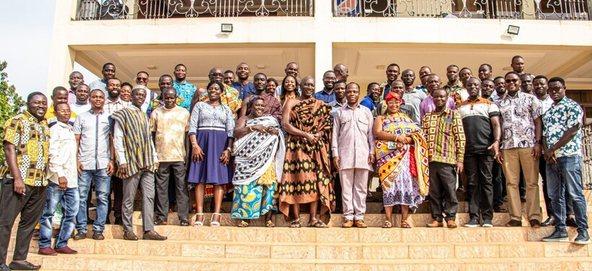
Over 60 government, community and water sector leaders gathered in Goaso last month to finalise a coordinated approach to maintaining rural and small-town water systems across the Ahafo Region.
Convened by IRC Ghana and the Ahafo Regional Coordinating Council with support from the Conrad N. Hilton Foundation, the Regional Learning Alliance Platform brought together municipal and district assemblies, traditional authorities, development partners, civil society and service providers to review the draft Operations and Maintenance Framework.
Protecting Water Investments
The Ahafo Region has made notable progress in expanding access to safe water through the implementation of district WASH masterplans. However, sustainability risks persist, particularly where operations and maintenance, financing, monitoring and oversight systems remain weak. The new O&M Framework responds to these challenges by providing a structured, region-wide approach to strengthening service delivery, protecting water infrastructure investments and ensuring the long-term functionality of water systems.
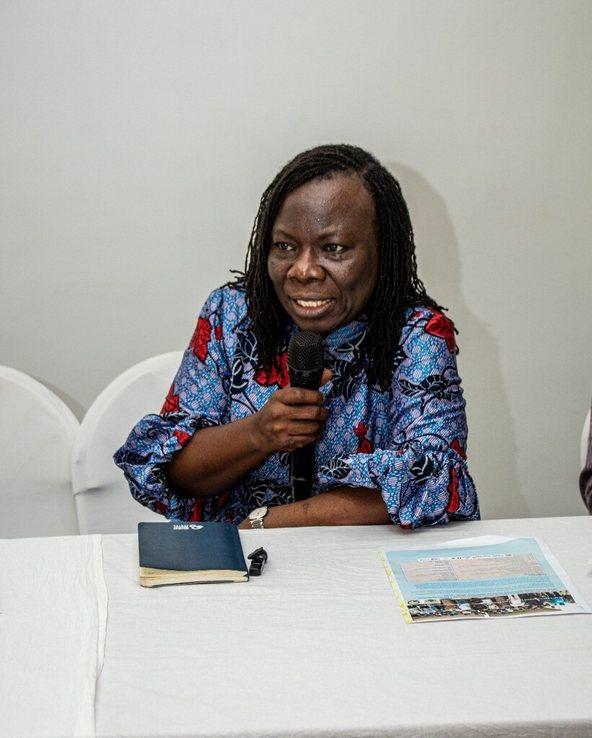
Vida Duti, IRC Ghana Country Director, delivers opening remarks at the framework validation session
In her remarks, Vida Duti, IRC Ghana Country Director, emphasised the importance of collective action and institutional accountability in improving water service reliability across districts.
Framework for Sustainable Water Services
The draft framework was presented by Dr Eugene Appiah-Effah, Consultant and Lecturer at the Department of Civil Engineering, Kwame Nkrumah University of Science and Technology (KNUST). He highlighted persistent challenges affecting rural and small town water systems, including reactive maintenance practices, weak financial systems, limited preventive maintenance planning, gaps in spare parts supply chains, and unclear institutional roles.
The framework's core objectives include:
- Improving service reliability and functionality
- Strengthening financial sustainability and cost recovery
- Enhancing water quality management
- Clarifying governance arrangements, roles and accountability
Guiding principles such as preventive maintenance first, transparency, professionalism, climate resilience and continuous performance improvement underpin the framework, which spans governance arrangements, service delivery models, technical procedures, tariff and revenue systems, customer accountability, risk management and monitoring mechanisms.
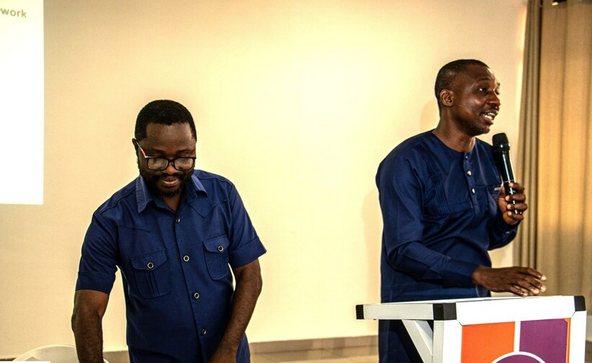
Eugene Appiah Effah, KNUST, and Jeremiah Atengdem, IRC Ghana, present the draft framework
"This framework is more than a technical document; it is a shared commitment to ensuring that water systems in Ahafo continue to serve people reliably, safely and sustainably."
Dr. Eugene Appiah Effah, KNUST
Stakeholder Validation
Participants engaged in structured group discussions to validate key elements of the framework, focusing on:
- Institutional custodianship, with strong support for the Ahafo Regional Coordinating Council's coordination role, complemented by district level oversight
- Realistic minimum service standards, including 20 litres per person per day, access within 500 metres, and at least 95% system functionality
- Financing approaches balancing tariffs, affordability and equity, including blended financing for capital maintenance and emergency repairs
- Accommodating diverse management models and technologies
- Improving usability through simplified tools, such as operator handbooks, maintenance templates and checklists
Participants also proposed innovative solutions, including digital monitoring platforms such as mWater, prepaid metering, solar powered systems, and strengthened by-laws to regulate maintenance processes.
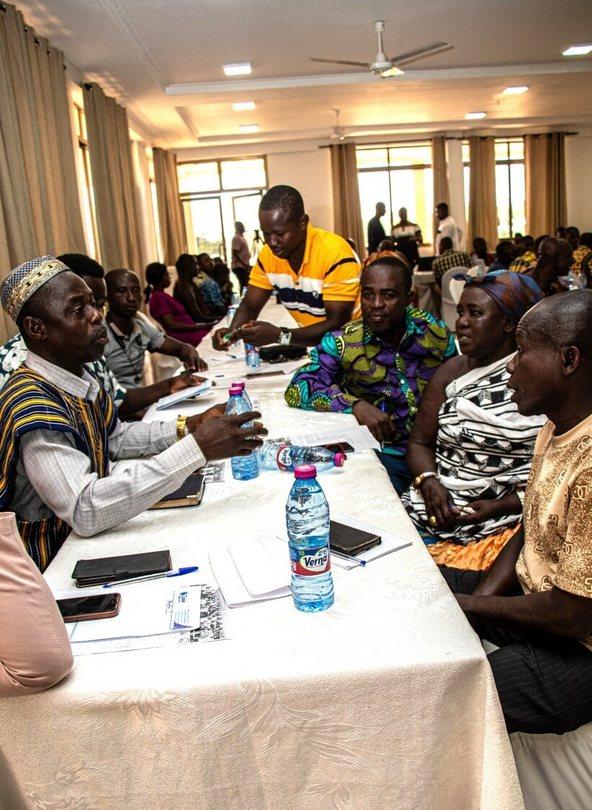
Regional stakeholders work in small groups to review the framework
Priority Actions Agreed
Key actions agreed include:
- Developing a field-ready O&M handbook for operators and district oversight teams
- Embedding O&M obligations in performance contracts and memoranda of understanding
- Strengthening coordination among NGOs to reduce duplication
- Enforcing financial accountability through audits and legal mechanisms
- Expanding the use of technology for real-time monitoring and reporting
Traditional leaders highlighted the importance of community ownership, while district planning officers emphasised timely reporting to support evidence-based planning.
Conclusion
The validation workshop marks an important step in the Ahafo Region's commitment to sustainable water service delivery. With strong leadership from the Ahafo Regional Coordinating Council, district assemblies, service providers and partners, the O&M Framework provides a practical and harmonised foundation for strengthening operations, enhancing accountability and safeguarding water infrastructure investments.
As one district participant observed:
"Success should be judged by our continuous service delivery."
IRC Ghana will continue working closely with regional and district partners to finalise and support the implementation of the O&M Framework as a cornerstone of sustainable, inclusive and resilient WASH services in the Ahafo Region.