Article
Understanding exclusion: four scenarios under which Europeans do not fully enjoy water and sanitation services
Europe’s water and sanitation services are broadly reliable, but significant inequalities mean some people are already excluded from safe services while others face growing risks from climate change, ageing infrastructure and limited provider capacity. The blog identifies four forms of exclusion: social and economic, geographic, potential future exclusion, and exclusion from the environmental and public-health benefits of services, providing a framework for understanding who is affected and what action is needed.
This European summer showed the stress placed on our drinking water and sanitation services (see Riva-The costs of climate are hiding inside Europe's water systems). Luckily, in most places water continued to come out of the tap. However, it also reminded us that, even in Europe, people can be at risk of not having their human right to water. In fact, there are substantial inequalities within Europe, with safely managed drinking-water coverage in 2024 ranging from universal or near-universal coverage in many countries to 89% in Poland, 87% in Croatia and 82% in Romania (WHO, 2025, Progress on household drinking water, sanitation and hygiene 2000-2024). This blog tries to unpack these gaps. It presents four different types of exclusion of the benefits from water and sanitation, and describes the status of each. We identified four major scenarios in which people are either excluded, or are at risk of being excluded. This framework seeks to provide a guide to those risks and to identify relevant actions. Across Europe, some people face:
Scenario 1 — social and economic exclusion within served areas. People living within areas a utility otherwise serves well, but who are excluded — or remain at risk of losing access — for social or economic reasons.
Scenario 2 — geographic exclusion. Households not reached by, or receiving an inherently inadequate service from, networked utilities because they are geographically remote — relying instead on self-supply or small community-managed systems that cannot achieve a networked utility's economies of scale. These types of self-supply may not provide the same level of service as a utility would.
Scenario 3 — potential future exclusion. Populations and areas currently well served, but by providers with structurally limited financial, human or technological capacity to adapt to emerging threats — climate change, ageing infrastructure, resource depletion. All of Europe faces future threats to supply; the scenario of concern here is specifically where the provider lacks the capacity to respond, not the hazard itself.
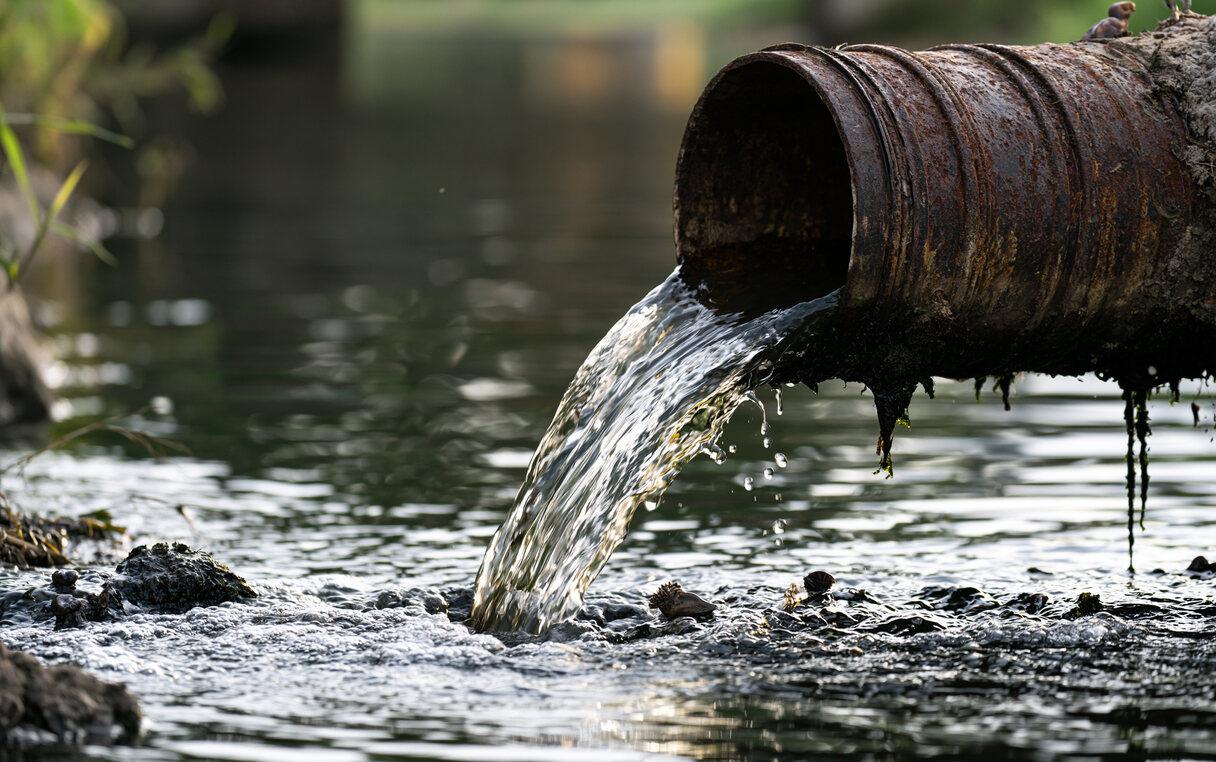
Scenario 4 — exclusion from the environmental and public-health benefits of services. Populations who have access to a service — e.g. a sewer connection — but where the service does not deliver its intended downstream benefit, for instance because wastewater is inadequately treated before discharge into a river.
In this blog, let us zoom into each of these scenarios, in terms of: 1) how the scenario manifests itself in practice, 2) the number and types of people affected, and 3) the types of measures that are being taken to address the situation.
A good service nearby, but still out of reach
Exclusion can persist even in an area served by a capable utility (Equitable access to drinking-water: focus on European Union member states | Journal of Water, Sanitation and Hygiene for Development | IWA Publishing). According to the WHO/UNICEF Joint Monitoring Programme (JMP), 74% of the world's population used safely managed drinking water services in 2024 (WHO publication page and UNICEF/JMP report page). While access exceeds 99% in countries such as the United Kingdom and the Netherlands, significant disparities remain across Europe and globally. The figures show the substantial progress achieved in some countries and the continuing challenges of ensuring universal, equitable access to safe and reliable drinking water. There are gaps everywhere. In some cases, the challenge is not extending access but protecting existing services. In Ukraine, for example, water and sanitation facilities are under constant attack.
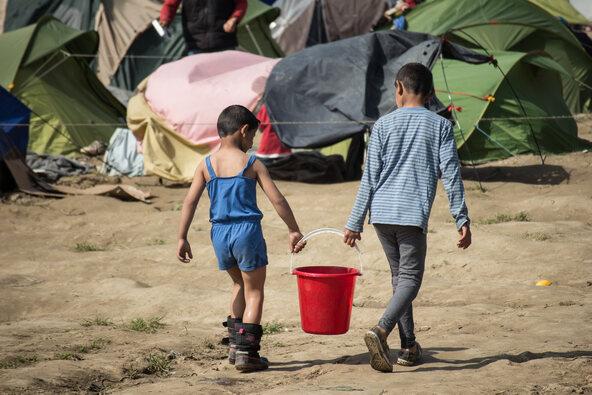
Even in countries with close to 100% access to safe water, Roma communities, people without official documentation and households living on very low incomes may be physically close to a network but unable to access or afford its services.
A systematic review found that Roma communities across Europe faced greater challenges than majority populations in relation to water, sanitation and hygiene, waste management, housing and environmental hygiene. The barriers identified included poverty, affordability, discrimination, social exclusion, geography, legal circumstances and limited involvement of Roma communities in planning (A systematic review of water, sanitation and hygiene among Roma communities in Europe: Situation analysis, cultural context, and obstacles to improvement).
More recent research has shown how racism, discrimination and social exclusion can continue to prevent universal access to safe water and sanitation even in high-income countries (The effects of racism, social exclusion, and discrimination on achieving universal safe water and sanitation in high-income countries). Inadequate access in Europe reflects choices about policy, priorities and inclusion, rather than simply a shortage of resources (Challenging exclusion: bringing the human rights to water and sanitation to Europe | Journal of Water, Sanitation and Hygiene for Development | IWA Publishing).
These pressures can also have a gender dimension: where water becomes less affordable, reliable or accessible, women may bear a disproportionate share of the consequences, particularly where they have responsibility for household water management or unpaid care.
The responses to these inequalities would be mainly social and economic. They may include targeted tariffs and subsidies, simpler account-opening arrangements, safeguards against losing essential services, and proactive engagement with communities that utilities do not normally reach.
European legislation already provides a basis for action. Article 16 of the recast EU Drinking Water Directive requires Member States to take measures to improve or maintain access to drinking water for all, with particular attention to vulnerable and marginalised groups (Drinking Water Directive). In Hungary for example, even though there the human right to water is reflected in national legislation, people are prescribed access to safe drinking water even when they can’t pay. So even a legal framework doesn’t solve problems unless it is followed, and leaves some groups even further behind.
When geography determines service quality
Other households are excluded because they live beyond the practical reach of strong networked providers.
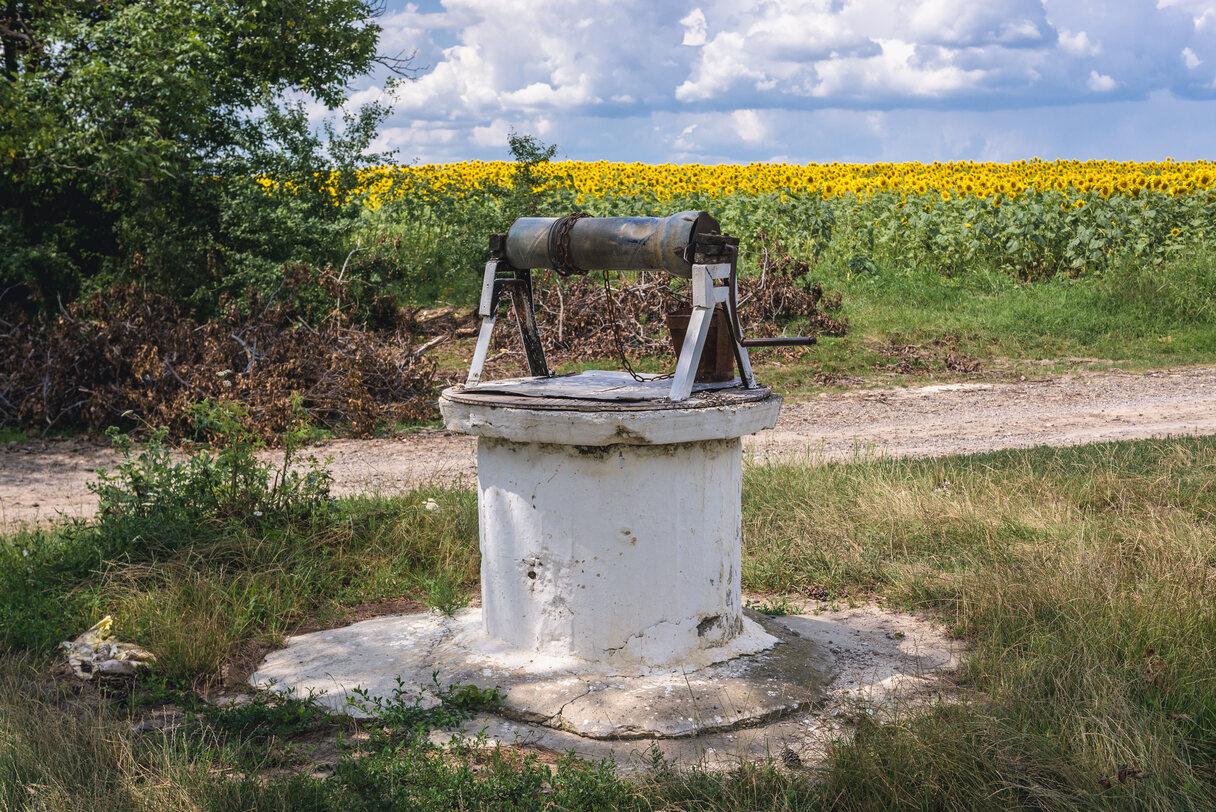
Across the pan-European region, many rural communities depend on small-scale systems rather than large networked utilities. Around 23% of the region’s population receives drinking water from small-scale systems serving under 5000 people. There is substantial dependence on household or group supplies in countries including Ireland, Denmark, Finland, Germany and Austria, as well as in Romania, Moldova, Ukraine and Bosnia and Herzegovina (Self-Supply).
While comprehensive national information about these dispersed systems is often not available it is difficult to assess their performance systematically (UNECE programme page). A rapid assessment in rural Serbia found considerably lower compliance with national drinking-water standards among small supplies than among urban systems. Georgia has also reported low access in rural areas with only 41% people having access to safe water.
The problem is partly infrastructural. Small operators cannot necessarily achieve the economies of scale, technical depth or financial resilience available to a large networked provider. Depending on local circumstances, responses may include stronger monitoring, professional support, shared technical services, partnerships with larger providers or consolidation.
Where it may not be possible to connect people to a utility network, the approach followed is often one of support to group or individual supplies. In several higher-income European countries it is actively supported through government advice, regulation, monitoring, grants or loans, while cooperative models are particularly well established in Ireland, Denmark and Finland, and government-led support to individual private water supplies can be found in Scotland.
Reliable today, vulnerable tomorrow
A third risk is harder to see because it concerns people who currently receive an acceptable service.
All European service providers face some combination of climate change, ageing infrastructure, pressure on water resources and changing demand. But not all the providers have the financial, human and technological capacity to respond.
A service provider may deliver a reliable service today while postponing asset renewal or struggling to recruit skilled staff. It may have few alternatives if its source deteriorates or a treatment process needs upgrading. What begins as limited institutional capacity can eventually become a failure in service delivery.
Communities served by stronger providers may benefit from their ability to develop new sources, leakage reduction, water reuse and improved treatment. Those served by financially or technically weaker providers may face rising costs, restrictions or declining reliability.
Climate resilience therefore involves also developing capable institutions, skilled staff, sound monitoring and clear accountability. A utility may have considerable engineering capacity to keep water flowing, while having much less capacity to identify who is being left behind, why they are vulnerable, and how climate adaptation measures will affect them.
Connected, but not with all the benefits
Sanitation reveals another tension. A household may be connected to a sewer, but that does not guarantee that its wastewater is safely collected and treated. The household itself may then have the full benefits, but downstream households don’t.
Across the EU, the gap between connection and safe treatment remains an important policy concern. The revised Urban Wastewater Treatment Directive extends requirements to smaller agglomerations, strengthens nutrient and micropollutant removal, and requires monitoring of substances including PFAS and microplastics. It also introduces stronger provisions on stormwater management and the energy performance of wastewater services (European Commission announcement; Urban Wastewater Treatment Directive).
The Directive also applies the polluter-pays principle to micropollutants. Producers of pharmaceuticals and cosmetics will be required to finance at least 80% of the cost of removing pollution associated with their products. This is intended to limit the amount transferred to water tariffs and public budgets.
The UK presents an illustrative example. Sewer connections are widespread, yet storm overflows and wastewater treatment have become prominent public concerns.
In 2022, the UK Parliament Environmental Audit Committee reported that only 14% of English rivers met good ecological status and that no English river received a clean bill of health for chemical contamination. It identified pollution from sewage, agriculture, roads and plastics, alongside weaknesses in monitoring, governance and enforcement (‘Chemical cocktail’ of sewage, slurry and plastic polluting English rivers puts public health and nature at risk - Committees - UK Parliament).
Concern about river health has contributed to the prominence of river trusts and other catchment organisations. The movement began more than 20 years ago and is now coordinated by The Rivers Trust, with 65 member trusts across Britain, Northern Ireland and Ireland. These organisations combine local knowledge, evidence, practical restoration and public engagement.
The State of Our Rivers assessment reports that no river stretch in England or Northern Ireland achieves good overall health. It identifies sewage, chemical, nutrient and plastic pollution, together with habitat loss, drought and water scarcity, as pressures on rivers (State of Our Rivers).
River Trusts do not replace capable utilities, effective regulation or public investment. Their emergence nevertheless points to an important principle. The people affected when sanitation fails are not limited to customers connected to a sewerage system. They include downstream communities, swimmers, anglers, farmers, local businesses and everyone who depends on a healthy river.
And if done well, the use of treated effluent can be one of the ways of dealing with droughts. Effluent that meets quality standards – including temperature – can be put back into the natural water systems, and be part of adaptation strategies.
Climate change exacerbating exclusion
Climate change will test the resilience of Europe’s water systems, but its impacts will not be felt equally. Those most affected will be the same people who already face barriers to safe and affordable water services: residents of remote rural communities, people served by under-resourced small-scale systems, low-income households, displaced populations, Roma communities, homeless people and others living at the margins of society.
A framework was used to show how exclusion manifests itself already now, and how climate risks may make the issue bigger. This draws attention not only to infrastructure and water resources, but also to the social, economic, institutional, geographic and gender-related barriers that prevent some groups from securing reliable services and who bears the costs when those services fail. Climate resilience is not only about protecting existing systems from droughts, floods or extreme weather. It is also about seeing who is currently left behind and addressing the factors that exclude them.
Europe's response to climate change therefore offers an opportunity to do more than strengthen water infrastructure. It provides an opportunity to build more inclusive water services that reach those who remain underserved today. If investments in adaptation are guided by equity and inclusion, they can reduce both climate vulnerability and existing inequalities. Otherwise, climate change risks deepening the very patterns of exclusion that already prevent millions of people from enjoying their human right to water.