Article
From evidence to action: reflections from the Africa Water & Sanitation Systems Leadership Symposium 2026
Scaling innovation, acting on evidence, and trusting data: Kigali Symposium lessons for stronger WASH systems.
A symposium’s value is ultimately measured not by the conversations it creates, but by what those conversations enable stakeholders to do afterwards.
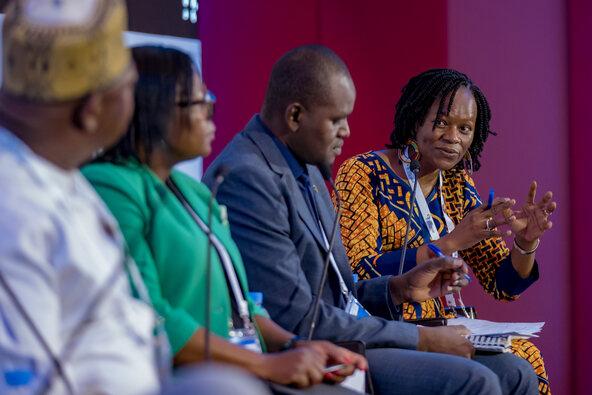
From August 17–21, 2026, the Africa Water & Sanitation Systems Leadership Symposium took place in Kigali. Convened by AMCOW and the African Union Commission, the symposium brought together 616 delegates from 63 countries, including governments, development partners, financing institutions, and civil society, to address a central challenge: how can the WASH sector move from commitments and promising initiatives to stronger, more sustainable systems?
To explore the key messages emerging from the Kigali symposium, we spoke with Martina Rama, UNICEF WASH Finance Specialist, and Franck Bouvet, UNICEF Senior WASH Adviser. Both are involved in the Accelerating Sanitation and Water for All (ASWA) Phase III programme and shared their reflections on how evidence, innovation and learning can be translated into stronger water, sanitation and hygiene (WASH) systems. From these discussions, five crucial points stood out.
From pilots to scale: moving beyond what works in isolation
The Symposium showcased many innovative approaches and successful local models. Through the marketplace and youth innovation dialogues, participants discovered practical solutions that have proven effective in their own contexts, offering inspiration for adaptation and scale. These include results-based financing models, green water bonds, devolution funds, water catalyst initiatives, revolving funds, water equity, and others. However, isolated successes are no longer enough to achieve universal access. Martina pointed out that, while SDG 6 is unlikely to be achieved by 2030, only the scaling up of successful pilot initiatives can deliver the scale required to accelerate progress. The focus must now shift from demonstrating what works to implementing proven solutions at scale.
A successful example of scaling was showcased during the youth innovation dialogues session. Among the top-ranked solutions, Ghana Water Ltd presented a youth-led investment-readiness model that combines community fieldwork with AI-assisted report generation to prepare donor-grade feasibility studies. With it, the national water utility independently secured over USD 15 million in international financing to extend water networks in low-income urban areas. Scaling requires alliances, partnerships, and deliberate pathways for broader impact. But scaling does not mean applying a rigid, one-size-fits-all template across every context. Pilot initiatives must be adapted to institutional capacity, local governance, and available resources, and matched with systems strengthening approaches to strengthen the enabling environment.
From checks to change: making evidence work for the sector
A core theme during the Kigali discussions was the evolution of sustainability assessments, such as the Sector-Wide Sustainability Check (SWSC), funded by EU. The session "From Checks to Change", organized by Riva, UNICEF and IVL, brought together government and partner voices from Liberia, Mali, Nigeria and Malawi to share how SWSCs can become country-led pathways to stronger WASH systems. Franck Bouvet, UNICEF Senior Advisor, captured the spirit of the discussion:
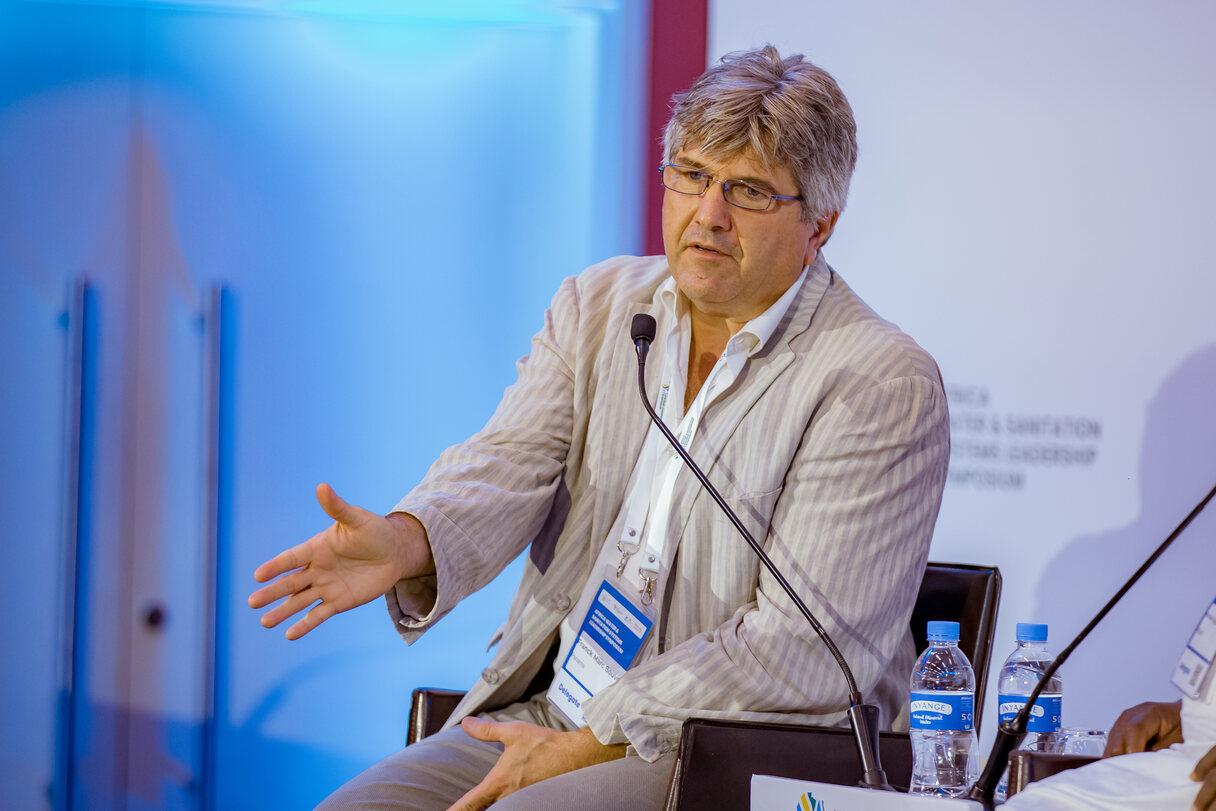
The value of a SWSC does not come from collecting more indicators, but from generating actionable evidence.
Franck Bouvet
For Franck Bouvet, the question is not simply whether a country has completed a sustainability assessment, but what happens afterwards. The real value of the exercise lies in whether its findings feed into sector dialogue, planning, budgeting and accountability. Practical examples are already emerging. In Liberia, the National WASH Commission is using the SWSC advisory note to strengthen the national monitoring and evaluation system and feed the findings into the national management information system. In Nigeria, the SWSC has been validated, and a compact is now being developed with sub-national governments to turn the findings into action. In both countries, the findings are being built into national systems rather than left as a one-off exercise.
To make this the norm, Franck recommends linking SWSC results systematically to the accountability mechanisms countries already use: Joint Sector Reviews, GLAAS, national compacts and Water Forward processes. Other speakers added two conditions. The process must stay government-led, with partners such as Water For People supporting it without creating parallel systems. And it should be aligned with political and budget cycles, so that it outlasts leadership changes.
The session highlighted a clear lesson: evidence creates impact only when it is used. When monitoring findings enter sector dialogue and budgeting processes, they can shape decisions, guide investments, and support lasting reform.
From data to decisions: making evidence usable for the sector
The same principle came up in the Symposium's session on Data for Decision-Making organised by AMCOW, WHO and UNICEF: the challenge is not simply to collect more data, but to make sure the data we have is coherent, reliable and useful to the people making decisions. The session, showcasing JMP and GLAAS initiatives, as well as WASSMO, Ngor and the AIP scorecard, focused on how global, regional and national monitoring initiatives should align and be mutually reinforcing. The Align to Accelerate (A2A) initiative provides a good opportunity to make these efforts work better together. Reliable, coherent data matters even more as the sector turns to financial institutions and private capital. Research by AMCOW and DAI found that demand for sanitation is not the problem. Bankability is. Investors want credible, well-prepared deals and clearer policy signals before they commit. As Martina points out, data disaggregation, transparency, and credibility are fundamental to attracting investors and bridging the knowledge gap between sector technicians, political decision makers, and financial institutions.
The 2025 AIP-PIDA Water Investment Scorecard shows how evidence can change the conversation. Africa's average investment readiness scores just 41.2 out of 100, with wide gaps between countries. Yet the Scorecard also shows that the USD 30 billion investment target could be reached without new external finance, through efficiency gains and better domestic resource mobilisation. Good data doesn't just diagnose the problem. It shows where the money already is and how it can be used more efficiently.
Financing sustainable services: strengthening the enabling system
Discussions on WASH finance often focus on tariffs, but tariffs alone cannot close the sector's funding gap. They help cover operating costs and sustain existing services, yet they are rarely enough to reach unserved and vulnerable populations. That takes public financial management, tax revenues, fiscal space, and efficient spending.
Franck Bouvet is clear that systems strengthening "is not principally about introducing another tool." It is about improving how institutions collectively plan, finance, and regulate the sector. Governments need strong public systems, he says, "not simply to manage programmes, but also to mobilise and use finance effectively." Investors, financing institutions and donors look for the same things: credible sector plans, predictable regulation, accountability, and reliable data. Together, these build the sector's creditworthiness.
And it doesn't happen in one go. System change comes through recurring cycles of evidence, dialogue, prioritisation, implementation, and review. In Franck's words, "repetition matters more than being precise."
So, the crucial question remains: if systems strengthening is essential to sustainable services, how will financial streams evolve to explicitly resource it?
From Kigali to action: the next steps
How do we move past the conversations and great dialogue in Kigali? What's next? For both Martina and Franck, the next step is to strengthen the link between assessment, evidence, and action.
Translating learning from the Symposium into concrete progress requires clear action across global and national levels:
- Actionable Sustainability Tools: Adapting SWSC frameworks to be more flexible, country-led, contextualised, and directly linked to national financing discussions.
- Institutional Support: Supporting governments and regional bodies like AMCOW in implementing reforms that emerge from assessments, rather than stopping at report publication.
- Financial Efficiency & Monitoring: Strengthening public financial management and tracking expenditure efficiency to ensure existing funds deliver maximum impact.
Keeping Kigali's momentum alive
The conversations in Kigali do not end with the Symposium. Their value will depend on whether they continue to shape the way countries assess the sustainability of their WASH systems, use evidence in planning and decision-making, and approach financing for sustainable services.
For Martina Rama and Franck Bouvet, the message is clear: the sector does not need more isolated pilots, assessments or data for their own sake. It needs stronger connections between evidence, institutions, financing, and action.
The path forward relies on three fundamental shifts:
- From Pilots to Scale: Building pathways for proven initiatives to achieve broader impact.
- From Checks to Change: Using evidence to drive sector planning, budgeting, and accountability
- From Data to Decisions: Ensuring data is directly connected to the policy and financial choices that shape service delivery
The ultimate impact of Kigali will therefore be seen not in the number of conversations held, but in the reforms, budgets, partnerships, and decisions that follow.
*The Accelerating Sanitation and Water for All (ASWA) Phase III programme is supported by the Government of the Netherlands.